
What to Expect on a Full Day Cenote Diving Trip from Playa del Carmen
A full day of cenote diving from Playa del Carmen is one of the easiest ways to experience the underground world of the Riviera Maya without needing to be a cave diver. You leave the town, drive into the jungle, gear up beside a…
A full day of cenote diving from Playa del Carmen is one of the easiest ways to experience the underground world of the Riviera Maya without needing to be a cave diver.
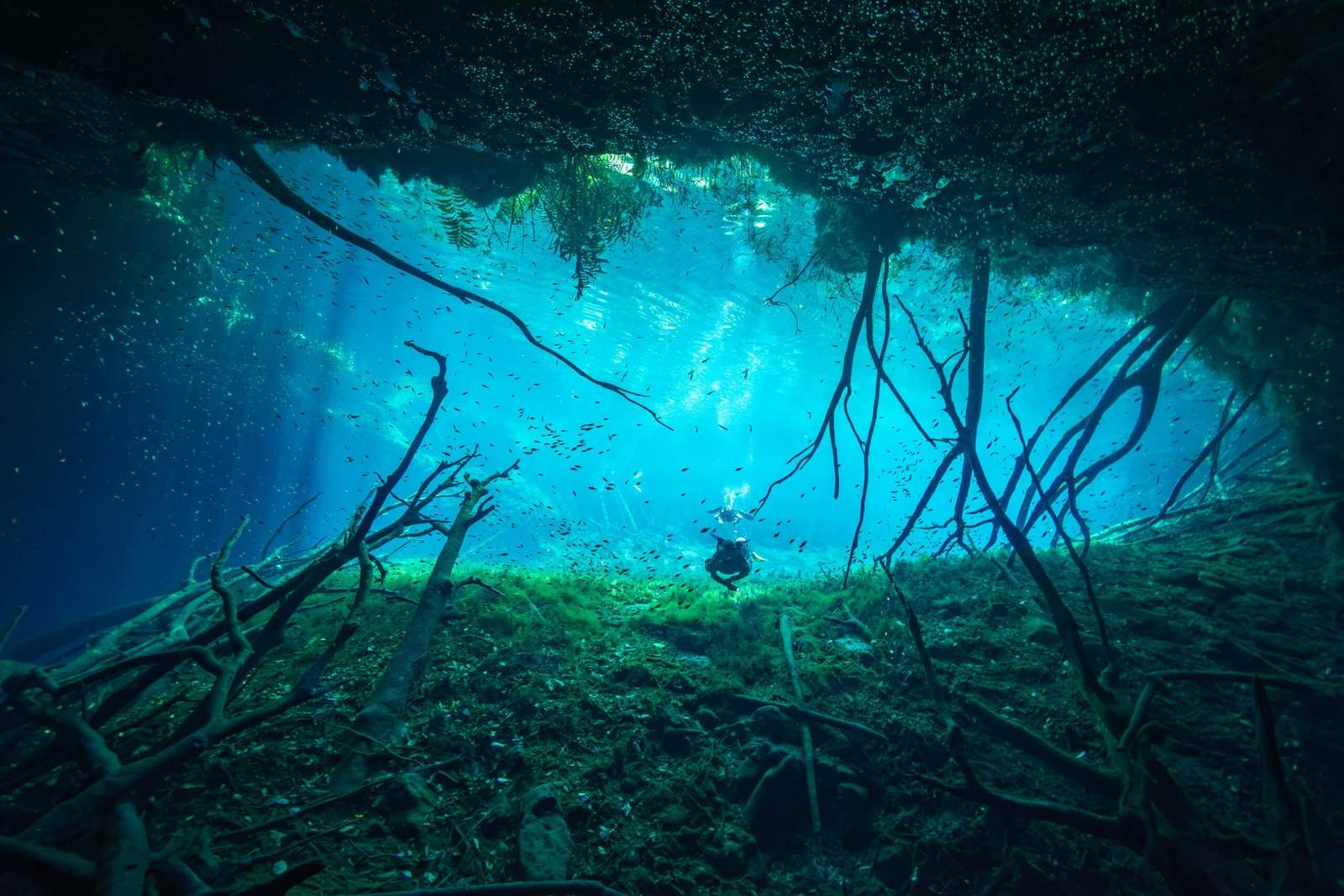
You leave the town, drive into the jungle, gear up beside a freshwater opening, listen to a detailed cavern briefing, and then descend into a completely different kind of dive environment. No waves. No reef current. No boat traffic. Just clear water, limestone, light beams, tree roots, haloclines in some sites, and the quiet feeling of diving inside an ancient flooded cave system.
For many certified divers, a cenote day becomes the highlight of their trip to Mexico.
But if you have never done it before, you probably have questions. How long is the day? Do you need special training? What should you bring? Are the dives dark? Is lunch included? How cold is the water? Is it safe for Open Water divers? What actually happens from the moment you arrive at the dive shop to the moment you get back?
This guide explains what to expect on a typical full day cenote diving trip from Playa del Carmen, especially if it is your first time.
First: A Cenote Diving Day Is Not a Normal Reef Diving Day
If you have only done ocean dives, cenotes will feel different from the beginning.
Ocean diving in Playa del Carmen or Cozumel usually means boats, saltwater, reefs, fish, current, waves, surface chop, and blue water. Cenote diving is usually done inland, in freshwater, with a vehicle transfer from the dive shop to the cenote site. Instead of coral and marine life, the main attractions are limestone formations, cavern passages, natural light, exceptional visibility, and geological features.
Most recreational cenote dives are cavern dives, not full cave dives. That means certified recreational divers stay within controlled limits and follow a guided route. PADI describes guided cavern tours in cenotes as controlled dives along a line within the cavern zone, generally within the natural light zone and within a limited distance from the surface.
This distinction matters. You are not going into unrestricted cave passages unless you are properly cave trained. A full day cenote trip for recreational divers should be conservative, guided, and matched to your certification and comfort level.
Who Can Join a Cenote Diving Trip?
Cenote diving is for certified divers. In most cases, you need at least an Open Water Diver certification or equivalent. Some cenotes are suitable for Open Water divers with good buoyancy, while deeper or more demanding cenotes may require Advanced Open Water certification and recent experience.
Recreational cenote dives take place in the cavern area rather than the actual cave, so cave certification is not required for normal guided cenote dives. Still, divers do need to be certified and have proper buoyancy control.
That last part is important: proper buoyancy control.
Your certification card gets you started, but your actual comfort in the water matters more. Before booking, be honest about:
- your certification level
- number of logged dives
- date of your last dive
- comfort in darker spaces
- buoyancy control
- air consumption
- previous overhead or cavern experience
- any anxiety or physical concerns
A good dive center will use that information to choose the right cenote route. A first-time cenote diver should not automatically be sent to the deepest, darkest, or most famous cenote. The best first cenote is the one that fits your level.
Morning Arrival at the Dive Shop
Most cenote diving days start early.
You usually meet at the dive shop in Playa del Carmen, complete paperwork if needed, show your certification card, confirm equipment sizes, and talk with the team about your diving experience. Some operators may ask about your last dive, number of dives, certification agency, and whether you have dived in cenotes before.
This is also the time to mention anything important.
If you have not dived in a while, say so. If you get cold easily, say so. If you are nervous about overhead environments, say so. If you use a lot of air, say so. None of this is embarrassing. It helps the guide plan properly.
Equipment Preparation
You will need:
- BCD
- regulator
- tank
- weights
- mask
- fins
- wetsuit
- dive computer
- dive light
- certification card
- sometimes a hood or thicker exposure protection if you get cold
Many cenote dives require a dive light because parts of the route can be darker, even when natural light is still visible. Flashlights are required for cenote cavern dives and are used for underwater communication.
Exposure protection is also worth thinking about. Cenote water is cooler than the Caribbean Sea and does not change much throughout the year. Cenotes are around 24°C / 77°F, and a full 5 mm wetsuit is recommended for many divers, although comfort varies by person.
Even if the air temperature in Playa del Carmen feels hot, the water can feel cool after two dives. A 5 mm wetsuit is usually a smart choice.
The Drive to the Cenote
After equipment is prepared, the group drives from Playa del Carmen to the cenote area.
Travel time depends on the cenote selected. Some cenotes are relatively close to Playa del Carmen. Others are closer to Tulum, Puerto Aventuras, or deeper inland. The drive may be short or it may take around an hour or more, depending on the site, traffic, road conditions, and whether the route includes one cenote or two.
This part of the day is part of the experience. You leave the coast, pass through jungle roads, and arrive at a site that may feel completely different from the beach-town atmosphere of Playa del Carmen.
Some cenotes have large visitor facilities with bathrooms, parking, platforms, and swimming areas. Others feel more rustic. Some have stairs. Some require a short walk with gear. Some have platforms or benches for setup. Conditions vary a lot.
Bring footwear you can walk in comfortably on wet or uneven ground.
Arrival, Registration and Site Rules
When you arrive at the cenote, the guide handles site registration and entrance procedures. Many cenotes are privately owned, community-managed, or operated under specific local rules. You may need to wear a wristband, follow site-specific instructions, or respect areas reserved for divers, swimmers, snorkelers, or staff.
This is where cenote etiquette begins.
Do not wander into restricted areas. Do not jump into the water before the briefing. Do not stand on fragile areas. Do not apply sunscreen or insect repellent unless the site allows it. Do not assume all cenotes have the same rules.
Many cenotes are freshwater sources and fragile environments, so chemical products can be restricted. Even if a product says “reef safe,” that does not automatically mean it is allowed in a cenote. Follow the local rules.
The Cenote Briefing
The briefing is one of the most important parts of the day.
A cenote briefing is usually more detailed than a normal reef briefing because the environment is different. You may be entering a cavern zone, following a guideline, using a light, and moving through areas where buoyancy and fin control are essential.
The guide should explain:
- the name of the cenote
- the planned route
- maximum depth
- expected dive time
- entry and exit points
- gas management rules
- hand signals
- light signals
- group order
- what to do if you feel uncomfortable
- what to do if visibility is reduced
- how close to stay to the guide
- where not to swim
- environmental rules
- emergency procedures
Listen carefully, even if you are an experienced ocean diver. Cenote diving is not difficult when done correctly, but it is procedural. The plan matters.
This is also your last chance to ask questions before entering the water. If you are unsure about anything, ask on land, not halfway into the dive.
The First Dive
The first dive is usually designed to introduce you to the site and confirm that everyone is comfortable.
You enter slowly, adjust buoyancy, check equipment and follow the guide into the route. The pace should be calm. Cenote diving is not about swimming fast or covering distance aggressively. It is about moving carefully and seeing the environment without disturbing it.
The first few minutes often feel strange if you are used to ocean diving. The freshwater changes your buoyancy. The visibility may feel unusually clear. The water is still. Sound feels different. You may see rock ceilings, tree roots, limestone walls, or sunbeams entering from above.
This is where good trim matters.
Stay horizontal. Keep your fins away from the bottom. Avoid using your hands. Do not touch formations. Stay close enough to the guide to follow the route, but not so close that you crowd the diver in front of you.
Typical dive times vary by site, group, gas consumption, and conditions. One local operator describes its cenote tours as two dives, each around 45–50 minutes, with a surface interval between dives. This is a useful general expectation, not a fixed rule for every operator or every cenote.
Surface Interval in the Jungle
After the first dive, you will usually have a surface interval at the cenote.
This may be around an hour or less, depending on the plan. We provide water and lunch.
This is a good time to warm up, hydrate, talk about the first dive, and prepare for the second one.
Do not underestimate hydration. Playa del Carmen can be hot and humid, and you may be wearing a wetsuit, carrying gear, and walking around the jungle. Drink water before you feel thirsty.
The Second Dive
The second dive may be at the same cenote on a different route, or at a nearby cenote, depending on the plan.
A two-dive day is ideal because cenotes vary so much. One dive may be brighter and more open. Another may feel more cavern-like. One may be famous for light. Another may have formations, haloclines, roots, or a different geological atmosphere.
By the second dive, many divers feel more relaxed. They understand the freshwater buoyancy better, they know what the briefing style is like, and they are more comfortable with the pace.
That said, do not become careless. The second dive is still a cenote dive. Stay controlled, monitor your gas, avoid the bottom, and follow the route.
A well-planned second dive should complement the first, not push divers beyond their ability.
After the Dives
After the second dive, the group breaks down equipment, changes into dry clothes, packs the vehicle, and returns to Playa del Carmen.
A typical cenote diving day may start early in the morning and return in the early or mid-afternoon. A normal schedule begins at 7:30 a.m., with two dives, a surface interval of around 1 hour, and return to Playa del Carmen between 1:00 p.m. and 3:00 p.m. Actual timing will vary depending on cenote distance, group size, traffic, and site logistics.
It is smart not to schedule something tight immediately afterward. Cenote days can run longer if the site is farther away, if there is traffic, or if the group takes more time with equipment.
Give yourself breathing room.
What Should You Bring?
For a full day cenote diving trip, bring only what you need, but do not arrive unprepared.
Good items to bring include:
- certification card or digital certification
- swimsuit
- towel
- dry clothes
- sandals or shoes for wet ground
- small dry bag
- hair tie if needed
- any personal medication
- dive computer if you have one
- mask if you prefer your own
- cash for tips, camera fees, extras, or site-specific charges
If you plan to bring a camera, ask first. Some cenotes charge camera fees, and some operators only recommend cameras for divers with excellent buoyancy.
For your first cenote dive, consider leaving the camera behind or using a very simple setup. Experience the place first.
What Not to Expect
A cenote diving day is not a party boat day. It is not a casual snorkel stop. It is not a race to collect Instagram footage. It is not a cave-diving expedition for untrained divers.
Do not expect:
- big waves or ocean conditions
- coral reefs
- lots of marine life
- warm tropical ocean water
- loud boat atmosphere
- independent exploration
- swimming into random tunnels
- touching formations
- guaranteed light beams in every cenote
- the same experience at every site
Cenotes are more subtle than reefs. They are about atmosphere, geology, silence, light, clarity, and control.
The better your expectations, the better your day will be.
Is a Full Day Cenote Trip Good for First-Time Cenote Divers?
Yes, if the cenotes are chosen correctly.
A first-time cenote day should usually begin with beginner-friendly routes. The goal is to introduce the diver to freshwater buoyancy, cavern procedures, light use, and environmental awareness without creating unnecessary stress.
Good first-time cenote choices may include places such as Chac Mool, Kukulkán, Garden of Eden, Chikin Ha, Casa Cenote, or Dos Ojos Barbie Line, depending on the diver’s certification and comfort level.
More advanced cenotes such as Angelita, The Pit, Dream Gate, Zapote, or Maravilla are usually better for experienced divers with the right certification, buoyancy, and comfort with depth or darker environments.
A good operator will not choose the cenote only because it is famous. They will choose it because it fits you.
Safety Mindset for the Day
Cenote diving can be very safe and enjoyable when procedures are followed. But it should never be treated casually.
The most important safety habits are simple:
Listen to the briefing.
Stay with the guide.
Follow the route.
Monitor your gas.
Control your buoyancy.
Do not enter cave passages.
Do not touch anything.
Signal early if something is wrong.
Stay within your certification and comfort level.
Even open-water-suitable cenotes can contain delicate formations and divers should have good buoyancy before doing a guided cenote tour. Do not to exceed your training by entering overhead environments for which you are not qualified.
That is the core of cenote diving: enjoy the beauty, but respect the limits.
Final Thoughts
A full day cenote diving trip from Playa del Carmen is usually a two-dive freshwater cavern experience with transportation, equipment preparation, a detailed briefing, one or two cenote routes, a surface interval in the jungle, and a return to town in the afternoon.
But that simple description does not fully capture the feeling.
The day takes you from the busy streets of Playa del Carmen into the quiet of the jungle. It introduces you to freshwater diving, limestone caverns, natural light, ancient formations, and a type of silence you do not find on the reef. It is calm, beautiful, and completely different from ocean diving.
The key is choosing the right operator and the right cenote for your level.
Do not chase the most famous name. Do not exaggerate your experience. Do not bring unnecessary pressure into the day. Be honest, listen carefully, move slowly, and let the environment do the work.
A good cenote diving day does not feel rushed. It feels controlled, respectful, and memorable.
You arrive expecting a dive.
You leave feeling like you visited another world.
Frequently asked questions
How long does a full day cenote diving trip from Playa del Carmen take?+
How many dives are included in a cenote diving day?+
Do I need to be certified to dive cenotes?+
Do I need cave diving certification for a cenote tour?+
Are cenote dives suitable for Open Water divers?+
What should I bring for a cenote diving trip?+
Is cenote water cold?+
Will lunch or snacks be included?+
Can I bring a camera on a cenote dive?+
Are cenote dives dark?+
What is the difference between cenote diving and ocean diving?+
What is the most important skill for cenote diving?+
Related articles
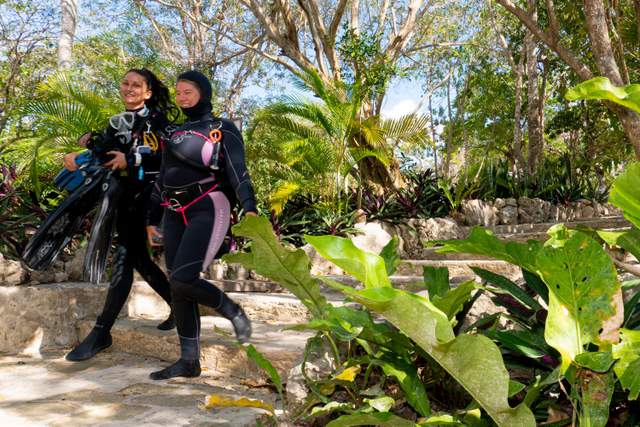
What Makes Cenote Diving Different from Ocean Diving?
If you are already a certified diver and you are planning a trip to Playa del Carmen, Tulum, or the Riviera Maya, cenote diving is probably one of the experiences you keep hearing about. And for good reason. Cenotes are not just…
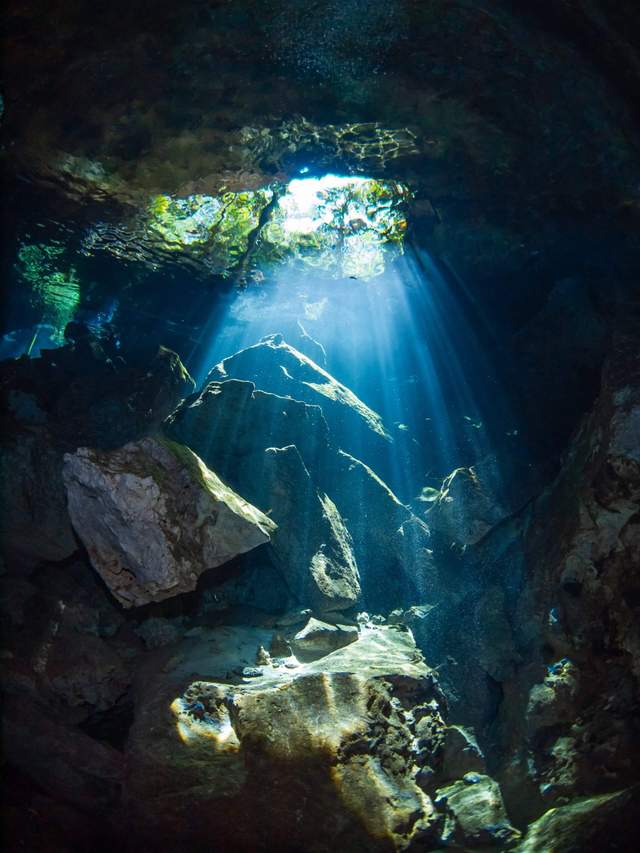
How to Plan a Multi-Day Cenote Diving Itinerary in the Riviera Maya
One cenote dive is unforgettable. But a well-planned multi-day cenote diving itinerary is even better. The reason is simple: cenotes are not all the same. One cenote may be bright, shallow, and full of open freshwater scenery.…
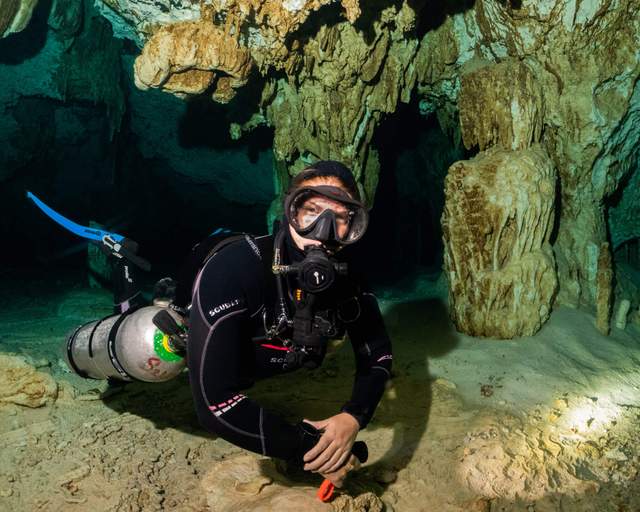
Best Cenotes for Advanced Divers Near Playa del Carmen and Tulum
Some cenotes are perfect for a first cavern dive. They are shallow, bright, spacious, and forgiving enough for certified divers who are new to freshwater cavern environments. Other cenotes are different. They may be deeper. They…