
How to Plan a Multi-Day Cenote Diving Itinerary in the Riviera Maya
One cenote dive is unforgettable. But a well-planned multi-day cenote diving itinerary is even better. The reason is simple: cenotes are not all the same. One cenote may be bright, shallow, and full of open freshwater scenery.…
One cenote dive is unforgettable.
But a well-planned multi-day cenote diving itinerary is even better.
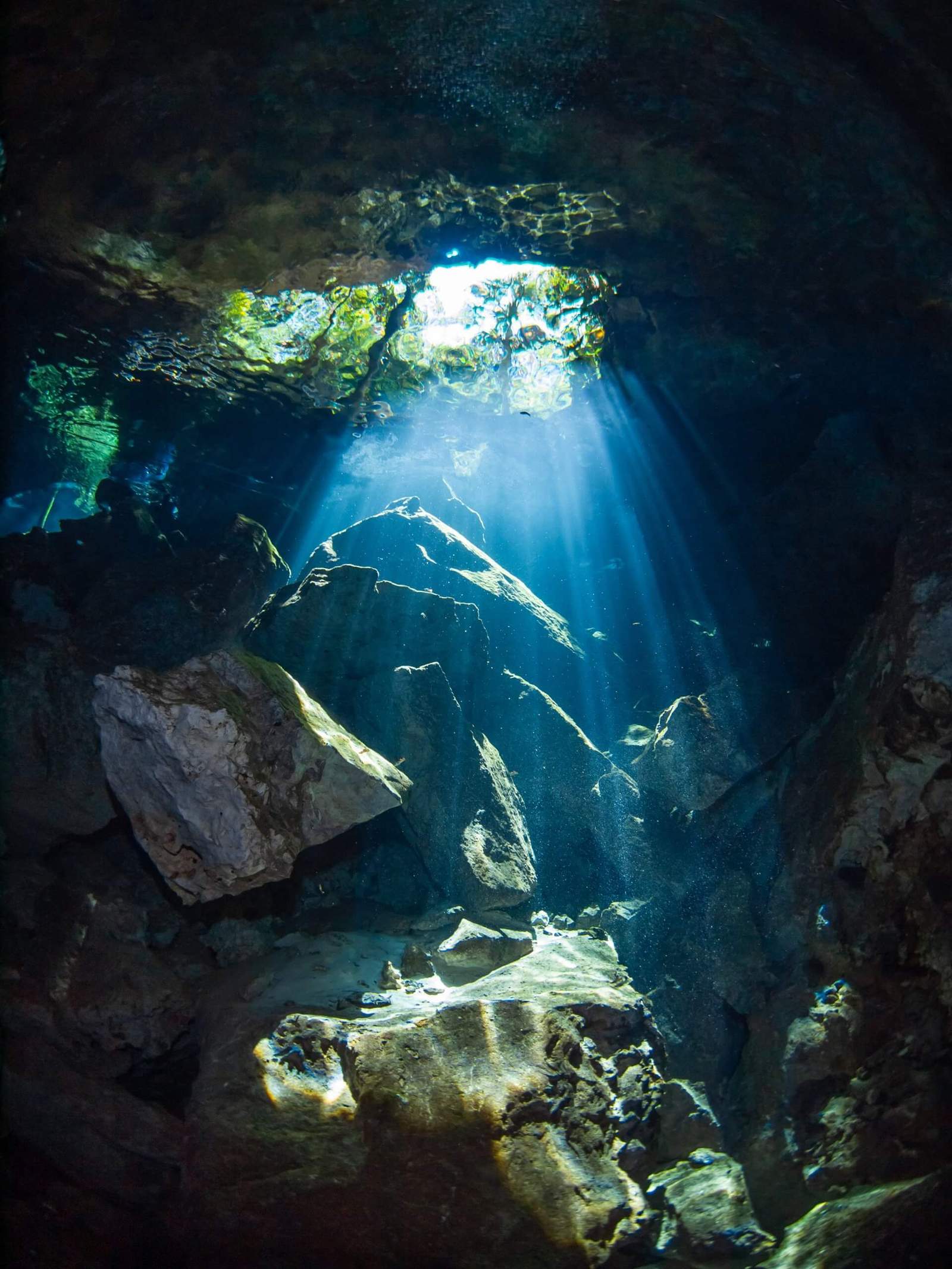
The reason is simple: cenotes are not all the same. One cenote may be bright, shallow, and full of open freshwater scenery. Another may feel like a cathedral of limestone. Another may be deeper, with a dramatic shaft of light dropping into blue water. Another may be all about delicate formations, haloclines, or the quiet atmosphere of a cavern route.
Trying to understand cenote diving from a single dive is like trying to understand the ocean from one reef.
A good itinerary gives you progression. You start with easier dives, adjust to freshwater buoyancy, learn how the briefings work, improve your trim, and then move toward more atmospheric or advanced cenotes if your certification and comfort level allow it.
This guide explains how to build a smart cenote diving itinerary in the Riviera Maya, whether you have one day, two days, three days, or a full week to dive.
Why You Should Not Start with the Most Advanced Cenote
Many divers arrive in Playa del Carmen or Tulum with a famous cenote already in mind. They have seen photos, watched videos, or heard another diver talk about a dramatic light beam, a hydrogen sulfide cloud, or an incredible cavern full of formations.
That excitement is normal. But the most famous cenote is not always the best first cenote.
Cenote diving is different from ocean diving because many recreational cenote dives are conducted as guided cavern dives, not normal open-water reef dives. PADI describes cenote cavern tours as controlled dives along a line in the cavern zone, within the natural light zone and within a limited distance from the surface. It also warns divers not to exceed their training by entering overhead environments they are not qualified for.
That is why progression matters.
Your first cenote dive should help you settle into the environment. You need to understand freshwater buoyancy, slower movement, guideline discipline, light use, group positioning, and how to avoid disturbing sediment or formations.
Once that feels natural, you can move toward deeper, darker, more decorated, or more advanced sites.
Start with Your Real Level, Not Just Your Certification Card
Your certification matters, but it is not the whole story.
PADI Open Water Divers are trained to dive to a maximum of 18 meters / 60 feet, while Advanced Open Water Divers are trained to dive to 30 meters / 100 feet. Deep Diver training extends the recreational limit to 40 meters / 130 feet.
Those limits are important, but they do not tell the full truth about your readiness for cenotes.
Before planning your itinerary, ask yourself:
How many dives have I done recently?
How is my buoyancy?
Can I hover without using my hands?
Am I comfortable in darker spaces?
Do I get nervous in overhead environments?
Do I have good air consumption?
Have I dived in freshwater before?
Am I planning to bring a camera?
A diver with an Advanced Open Water certification but poor buoyancy should not start with a fragile or deep cenote. A confident Open Water diver with recent dives and good trim may be perfect for a beginner-friendly cavern route.
The best cenote itinerary is built around the diver you are today, not the diver you hope to be by the end of the trip.
One-Day Cenote Diving Itinerary
If you only have one day for cenote diving, keep it simple and make it count.
For a first cenote experience, the goal should be variety without overload. You want one route that introduces the cavern feeling and another that gives you contrast: more light, more open water, different formations, or a different atmosphere.
A good one-day itinerary for first-time cenote divers might include beginner-friendly options such as Chac Mool, Kukulkán, Garden of Eden, Chikin Ha, Casa Cenote, or Dos Ojos Barbie Line, depending on the diver’s certification, buoyancy, and comfort level.
The exact pairing should be chosen by the dive center after checking your level.
For many divers, a good first day should feel like this:
The first dive introduces the cenote environment calmly.
The second dive lets you relax and enjoy it more.
You finish the day feeling excited, not exhausted or overwhelmed.
One day is not the time to prove anything. It is the time to discover whether cenote diving is your kind of diving.
For most certified divers, it becomes one of the most memorable dive days of the trip.
Two-Day Cenote Diving Itinerary
Two days gives you a much better experience than one because you can create progression.
On Day 1, choose easier or moderate cenotes. Focus on buoyancy, trim, freshwater weighting, and getting comfortable with the guide’s procedures.
On Day 2, choose cenotes that are slightly more atmospheric or more tailored to your interests.
For example:
Day 1: First cenote introduction
Choose bright, beginner-friendly, spacious routes. The objective is comfort and control.
Day 2: More character and contrast
Move toward a cenote with stronger cavern atmosphere, better formations, haloclines, or more dramatic light, depending on your level.
This structure works well because most divers are better on the second day. They are no longer surprised by freshwater buoyancy. They understand the slower pace. They know how to follow the guide without crowding. They are more careful with their fins.
That means they enjoy the dive more.
For advanced divers, Day 2 may include a deeper cenote if certification and recent experience support it. For newer divers, Day 2 may simply be a different beginner-friendly route with more confidence.
Both are valid.
Three-Day Cenote Diving Itinerary
Three days is where cenote diving becomes truly interesting.
With three days, you can create a balanced itinerary that includes introduction, progression, and a highlight day.
A sensible three-day plan might look like this:
Day 1: Easy Introduction
Start with cenotes that are open, bright, and forgiving. This is especially important if it is your first time diving in cenotes or if you have not dived recently.
The goal is not to maximize drama. The goal is to build confidence.
This is where you learn how cenote diving feels: the calm water, the stillness, the clear visibility, the need for precise buoyancy, and the way light behaves in limestone caverns.
Day 2: Classic Cavern Experience
On the second day, choose something with a stronger cenote identity. This could mean more limestone ceiling, better light effects, haloclines, tree roots, or a more defined cavern route.
By now, you should feel more comfortable moving slowly, staying horizontal, and avoiding the bottom. That makes the second day more enjoyable and more environmentally responsible.
This is often the day when divers really understand why cenote diving is special.
Day 3: Personal Highlight
The third day should be chosen around your main interest.
If you love photography, choose a cenote known for light and wide-angle scenery.
If you love geology, choose a site with strong formations.
If you are Advanced Open Water certified and comfortable with depth, a deeper cenote may be appropriate.
If you are still building confidence, choose another moderate cenote and enjoy the progression without pressure.
A good third day should feel earned. You are not jumping blindly into a famous dive. You are arriving with better control, better awareness, and a clearer idea of what you enjoy.
Four or More Days: Building a Full Cenote Diving Week
If you have four or more dive days, you can build an excellent Riviera Maya cenote diving week.
The key is not to make every day more intense than the last. That leads to fatigue and unnecessary stress. Instead, alternate the type of experience.
A strong multi-day itinerary might include:
One day of beginner-friendly or warm-up cenotes.
One day of classic cavern routes.
One day of light-focused cenotes.
One day of deeper or advanced sites, if qualified.
One day of formation-heavy or more delicate cenotes, if your buoyancy is excellent.
You can also mix cenote days with ocean diving. Playa del Carmen reefs, Cozumel, and seasonal bull shark dives can combine well with cenotes, depending on conditions and timing.
The advantage of alternating dive types is that it keeps the trip fresh. Cenotes are beautiful, but doing only deep or demanding sites every day is not always the best plan. Good itineraries consider energy, nitrogen loading, travel time, mental focus, and diver comfort.
How to Sequence Cenote Dives Properly
A smart itinerary usually follows this order:
Start easy.
Begin with cenotes that let you adjust to the environment.
Build gradually.
Move toward more atmospheric or demanding dives only after you feel comfortable.
Place deeper dives carefully.
Do not schedule deep cenotes casually at the end of a tiring day or after a late night.
Keep photography realistic.
Do not bring a large camera setup until you know your buoyancy is stable in cenotes.
End with a highlight, not a risk.
Your final cenote dive should be memorable, but still appropriate for your level.
This progression protects the diver and the environment. It also makes the whole trip feel better. You enjoy more because you are not spending the first dive overwhelmed.
Planning Around Water Temperature
Cenote water is cooler than the Caribbean Sea and stays relatively stable throughout the year. Riviera Maya cenote water is commonly reported around 24–26°C / 75–79°F, and many divers prefer a full wetsuit for comfort during repeated dives.
This matters more on a multi-day itinerary than on a single dive.
One cenote day in a thin suit may be manageable. Three or four cenote days in a row can feel colder, especially if you are doing shaded sites, longer dives, or surface intervals in wet gear.
Most divers are happier with proper exposure protection. Being cold affects your breathing, comfort, air consumption, and concentration. In cenotes, concentration matters.
Do not choose your wetsuit based only on the air temperature in Playa del Carmen. Choose it based on the water and the number of dives you plan to do.
Planning Around Flying After Diving
If your cenote itinerary is part of a larger vacation, leave enough time before flying.
DAN recommends a minimum preflight surface interval of 12 hours after a single no-decompression dive and 18 hours after multiple dives per day or multiple days of diving. Dives involving decompression require substantially longer.
For a multi-day cenote trip, this means you should not schedule two cenote dives right before an evening flight.
A conservative approach is to make your last day a non-diving day, especially if you have been doing multiple dive days. Use that day to relax, visit the beach, pack, eat well, and avoid rushing.
Good trip planning includes the day after diving, not only the dive days themselves.
Matching Cenotes to Your Interest
A multi-day itinerary should not only match your certification. It should also match your taste as a diver.
Some divers love light beams.
Some love geology.
Some love photography.
Some love deep profiles.
Some love shallow, delicate formations.
Some love open, relaxed dives.
Some want the strongest cavern atmosphere possible.
Tell your dive center what you actually want.
Do not just say, “Take me to the best cenotes.” That is too vague.
A better request is:
“I am Open Water certified, this is my first cenote day, and I want something beautiful but not too enclosed.”
Or:
“I am Advanced Open Water certified, I have recent deep dives, and I would like one day with a deeper cenote and one day focused on formations.”
Or:
“I am a photographer, but I only want sites that are appropriate for my buoyancy level.”
Clear information leads to a better itinerary.
Why Small Groups Matter on Multi-Day Cenote Trips
Small groups are always better in cenotes, but they become especially important over multiple days.
A small group allows the guide to match pace, monitor comfort, reduce sediment disturbance, and adjust the plan based on how divers actually perform. It also makes the experience calmer.
Large groups create more movement, more lights, more waiting, more chance of silt, and more stress. In a fragile cavern environment, that matters.
For a multi-day trip, try to dive with the same operation and, ideally, the same guide. That way, the guide sees your progression. They know how you dive. They can recommend better sites for the following days.
This is one of the biggest advantages of planning your cenote itinerary with a dive center rather than booking random single days.
Mistakes to Avoid When Planning a Cenote Itinerary
The first mistake is starting too advanced. A famous dive is not a good first dive if it does not match your current level.
The second mistake is overloading the schedule. Two cenote dives per day is usually enough for most recreational divers. Adding too much travel, late nights, or other intense activities can reduce comfort and focus.
The third mistake is ignoring exposure protection. Cenote water is beautiful, but it is cooler than many divers expect.
The fourth mistake is bringing a camera too early. If your buoyancy changes when you hold a camera, leave it behind until you are more comfortable.
The fifth mistake is treating every cenote as interchangeable. They are not. The difference between a beginner-friendly cenote, a deep sinkhole, and a fragile decorated cavern is significant.
The final mistake is choosing based only on Instagram. Photos do not show the full dive profile, the required skill level, the route, the depth, the darkness, or the environmental sensitivity.
Choose based on fit, not hype.
Sample Itinerary for a First-Time Cenote Diver
For a certified diver doing cenotes for the first time, a good two-day structure might be:
Day 1: open, bright, beginner-friendly cenotes focused on comfort and basic cavern awareness.
Day 2: a classic cavern route with more formations, light contrast, or haloclines, assuming Day 1 went well.
This gives the diver time to adapt without rushing.
The goal is to finish the trip wanting more, not feeling pushed.
Sample Itinerary for an Advanced Diver
For an Advanced Open Water diver with recent experience and strong buoyancy, a three-day structure might be:
Day 1: moderate cavern routes to adjust to cenote procedures.
Day 2: deeper or more dramatic cenote, if appropriate.
Day 3: formation-heavy or photography-focused cenote, depending on buoyancy and interest.
This structure works because even advanced divers benefit from a warm-up day. Ocean experience helps, but cenote diving has its own rhythm.
Sample Itinerary for a Photographer
For photographers, the itinerary should be built around light, conditions, and skill.
Start with a simple setup. Avoid large camera rigs on the first cenote dive unless you already have strong cenote experience. Choose sites with enough space and good natural light before moving toward more delicate environments.
A photographer’s itinerary should include extra honesty. If the shot requires you to get too close to formations, kick the bottom, block the group, or ignore the guide, it is not worth it.
Good cenote photography starts with good diving.
Final Thoughts
A multi-day cenote diving itinerary should feel like a progression.
Start with comfort. Build toward variety. Choose the highlight dives only when you are ready for them. Match the cenotes to your certification, recent experience, buoyancy, comfort in overhead environments, and personal interests.
The best itinerary is not the most aggressive one. It is the one that lets you enjoy every dive properly.
Cenotes reward patience. They reward slow movement, clean buoyancy, good trim, and respect for the guide and environment. The more carefully you plan your sequence, the more you will see and the better you will dive.
One cenote dive can impress you.
A well-planned cenote itinerary can change the way you think about diving.
Frequently asked questions
How many days should I spend cenote diving in the Riviera Maya?+
Should I do cenotes before or after ocean diving?+
What is the best first cenote for a multi-day itinerary?+
Can Open Water divers do a multi-day cenote itinerary?+
Do Advanced Open Water divers have more cenote options?+
How many cenote dives should I do per day?+
Can I combine cenote diving with Cozumel or Playa del Carmen reef diving?+
How cold is cenote water during a multi-day trip?+
Should I bring a camera for every cenote dive?+
How should I plan my last dive before flying?+
Related articles
What to Expect on a Full Day Cenote Diving Trip from Playa del Carmen
A full day of cenote diving from Playa del Carmen is one of the easiest ways to experience the underground world of the Riviera Maya without needing to be a cave diver. You leave the town, drive into the jungle, gear up beside a…
How to Choose the Right Cenote Dive for Your Certification Level
Choosing the right cenote dive is not just about picking the most famous name. It is about choosing a dive that fits your certification, experience, buoyancy, comfort level, and mindset. This matters because cenote diving is…
What Makes Cenote Diving Different from Ocean Diving?
If you are already a certified diver and you are planning a trip to Playa del Carmen, Tulum, or the Riviera Maya, cenote diving is probably one of the experiences you keep hearing about. And for good reason. Cenotes are not just…