
The Best Cenote Diving Routes for First-Time Cavern Divers
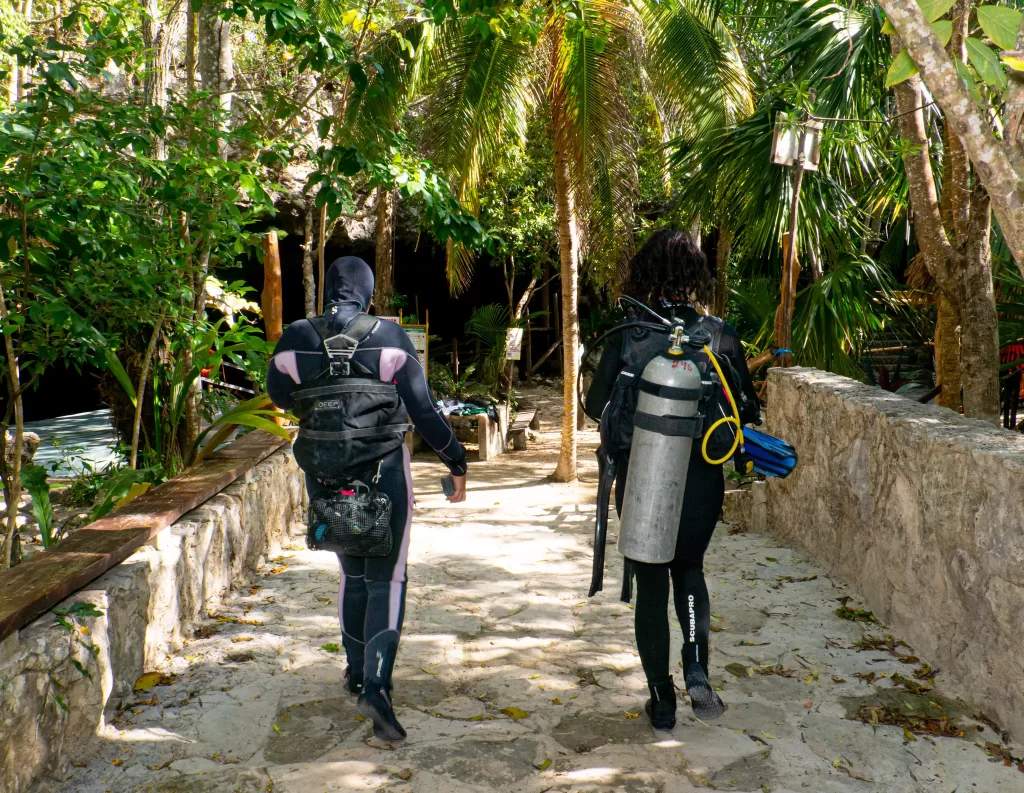
For many certified divers visiting the Riviera Maya, cenote diving is the experience they are most curious about — and sometimes the one they feel most unsure about. That makes sense. Cenotes are not ocean dives. They are…
For many certified divers visiting the Riviera Maya, cenote diving is the experience they are most curious about — and sometimes the one they feel most unsure about.
That makes sense. Cenotes are not ocean dives. They are freshwater cavern environments, often with a ceiling overhead for part of the route, limestone formations, dramatic light effects, and a very different safety mindset from reef diving. But that does not mean your first cenote dive has to be intimidating.
The key is choosing the right route.
A first cenote diving experience should not be about going deep, dark, narrow, or technical. It should be about discovering the cavern environment in a calm, controlled, enjoyable way. You want good visibility, manageable depth, clear natural light, enough space to move comfortably, and a guide who matches the dive to your level.
This guide is written for certified recreational divers who are considering their first cenote diving experience near Playa del Carmen or Tulum. It focuses on routes that are commonly suitable for first-time cavern divers, while also explaining what makes each option different.
Before we start, one important clarification: recreational cenote diving is usually cavern diving, not full cave diving. Cavern diving stays within the natural light zone and recreational limits, while cave diving requires specific cave-diving training and equipment.
That distinction matters. If you are not cave trained, you should never enter cave passages beyond recreational cavern limits.
What Makes a Good First Cenote Diving Route?
Not every cenote is ideal for a first cavern experience. Some cenotes are darker, deeper, more fragile, more technical, or simply more psychologically demanding. A good first route should make the diver feel introduced to the environment, not overwhelmed by it.
For a first-time cenote dive, the best routes usually have several of these characteristics:
- clear water and good visibility
- moderate depth
- visible natural light during key parts of the dive
- enough space to maintain comfort and trim
- no unnecessary depth or complexity
- a conservative dive plan
The goal is not to “push your limits.” The goal is to enjoy a unique environment while staying well inside them.
Route 1: Chac Mool and Kukulkán
Best for: first-time cenote divers who want a classic cavern experience with beautiful light effects
Typical profile: moderate depth, freshwater cavern, strong visual contrast, guided route
Recommended diver type: certified divers with reasonable buoyancy and comfort underwater
Chac Mool and Kukulkán are often recommended as a strong first cenote combination because they offer a beautiful introduction to cavern diving without immediately placing the diver into a very dark or intense environment.
Kukulkán is especially known for its light effects. On a sunny day, the entrance area can create impressive beams of light, giving divers that classic “cenote moment” many people imagine before coming to Mexico. The route introduces the feeling of swimming under limestone while still offering a relatively accessible experience for divers who are new to cenotes.
Chac Mool can feel slightly more cavern-like and atmospheric, which makes the combination useful: one dive gives you brightness and visual drama, while the other gives you a deeper sense of the overhead environment.
For first-time cavern divers, this route is usually a good fit if they are already comfortable in the water, can control their buoyancy, and are ready to listen carefully to the briefing.
This is not the right route for someone who is anxious, overweighted, or struggling to stay horizontal. But for a competent Open Water or Advanced Open Water diver, it can be a memorable first step into cenote diving.
Route 2: Chikin Ha
Best for: divers looking for a gentle first cenote experience with natural beauty
Typical profile: relatively accessible, moderate depth, light and cavern sections
Recommended diver type: first-time cenote divers, Open Water divers with good buoyancy
Chikin Ha can be a very good option for a first cenote dive because it is often less psychologically intense than some darker or deeper cenotes. It offers a mix of open areas, cavern sections, and clear freshwater scenery.
For many first-time cenote divers, this kind of environment is ideal. You are not just dropped into a dramatic overhead setting from the first minute. Instead, the dive can feel like a gradual introduction: open water, light, limestone, then a more cavern-like feeling.
That gradual rhythm matters. Cenote diving is not only a technical experience; it is also a sensory one. You hear less. You move slower. You notice your breathing. You become aware of the ceiling, the line, your fins, the light, and the space around you.
Chikin Ha is a strong option for divers who want to enjoy cenotes without feeling rushed into a more advanced environment. It is also a useful choice for divers who have not been diving for a while, provided they are still comfortable and do a proper check before the dive.
The main skill to bring here is calm finning. Even in easier cenotes, you still need to avoid disturbing sediment or touching the environment.
Route 3: Casa Cenote
Best for: nervous first-timers or divers who want a very open-feeling cenote experience
Typical profile: open cenote, mangrove environment, easier psychological profile
Recommended diver type: newer divers, rusty divers, divers unsure about overhead environments
Casa Cenote is different from many cavern-style cenote dives. It is more open, with a mangrove-like environment and a less enclosed feeling than classic cavern routes. For divers who are curious about cenotes but nervous about overhead spaces, Casa Cenote can be a useful first step.
It does not deliver the same full cavern atmosphere as Dos Ojos or Chac Mool, but that is precisely why it can work well for some people. It lets divers experience freshwater, cenote visibility, and a different underwater landscape without immediately dealing with a strong overhead sensation.
This can be especially valuable for:
- newly certified divers
- divers who have not dived recently
- divers who are unsure about darkness or enclosed spaces
- divers who want a relaxed warm-up before trying a more cavern-focused cenote
Casa Cenote can sometimes have a mild current depending on conditions, and the route is not the same kind of cavern dive as the others in this article. But as a confidence-building cenote dive, it can make sense.
One note: Casa Cenote is known for occasional sightings of a small crocodile in the area. That should be described accurately: it is not guaranteed, it is not the main purpose of the dive, and sightings depend on the day and situation.
Routes I Would Not Usually Recommend as a First Cenote Dive
Some cenotes are incredible but are not the best starting point for most first-time cavern divers. This does not mean they are unsafe when guided properly. It means they require more comfort, better buoyancy, more confidence, or a more advanced certification level.
Examples include:
Dos Ojos
The Batcave is a famous and beautiful route, but it should not be grouped with the easiest first-time cenote dives. It can feel more enclosed and atmospheric than the Barbie Line, so it is better suited to divers who already feel comfortable in cavern environments or who have completed an easier first cenote dive.
Angelita
Angelita is famous for its hydrogen sulfide cloud and deeper profile. It is visually unique, but it is not the best first cenote for most divers.
El Pit
El Pit is a spectacular deeper cenote with dramatic light and a halocline, but its depth makes it better suited to Advanced Open Water divers with good experience. It is not a beginner-friendly first cavern dive.
Dream Gate
Dream Gate is beautiful and full of delicate formations, but it can feel darker, more enclosed, and more demanding in terms of buoyancy and fin control. It is usually better for divers who already have cenote experience.
Zapote and Maravilla
These are impressive dives, but they are generally better suited to more experienced divers because of their depth, profile, or specific environmental features.
First-time cenote diving should build confidence, not test limits.
How to Choose the Right First Cenote Route
The right route depends less on your certification card and more on your actual comfort and control underwater.
Before choosing, ask yourself:
How many dives do I have?
A diver with 15 dives and a diver with 150 dives may both be Open Water certified, but they are not the same in the water.
How is my buoyancy?
Can you hover calmly without using your hands? Can you stay horizontal? Can you avoid touching the bottom?
Am I comfortable in darker environments?
You do not need to love darkness, but you should be able to stay calm when the environment feels different from the ocean.
When was my last dive?
If you have not dived in a long time, consider doing an easier dive or refresher first.
Do I want beauty or comfort?
For comfort, start with Casa Cenote or Chikin Ha. For classic cavern beauty, consider Kukulkán, Chac Mool, or Dos Ojos Barbie Line.
What to Expect on the Day
A typical cenote diving day from Playa del Carmen usually starts early. You meet at the dive shop, check equipment, drive to the cenote area, complete registration or entrance procedures, and receive a detailed briefing before entering the water.
The briefing is especially important. It should cover the route, maximum depth, hand signals, light signals, gas rules, group order, emergency procedures, environmental rules, and what to do if you feel uncomfortable.
The dives themselves are usually calm and slow. Cenote diving is not about covering distance quickly. You move carefully, stay close to the guide, follow the line, control your buoyancy, and enjoy the scenery.
After the dive, many divers are surprised by how peaceful the experience felt. The anticipation is often more intense than the dive itself.
Final Recommendation
For most first-time cenote divers, my preferred starting options would be:
- Chac Mool and Kukulkán — best overall first cavern experience.
- Dos Ojos Barbie Line and Garden of Eden — best beginner-friendly combination with a mix of cavern atmosphere and open, light-filled freshwater scenery.
- Chikin Ha — best gentle introduction.
- Casa Cenote — best for nervous or newer divers.
The most important decision is not just which cenote to dive. It is who you dive it with. Choose a dive center that keeps groups small, checks your level honestly, gives a serious briefing, and does not push you into a route that does not fit your comfort.
Your first cenote dive should feel special, controlled, and memorable.
Done right, it may become the dive you talk about long after your trip is over.
Frequently asked questions
What is the best cenote for a first-time cavern diver?+
Is Dos Ojos good for beginner cenote divers?+
Do I need Advanced Open Water to dive cenotes?+
Is Casa Cenote a good first cenote dive?+
Which cenotes should first-time cavern divers avoid?+
Is cenote diving scary the first time?+
What skills do I need before my first cenote dive?+
Are first-time cenote dives full cave dives?+
How many cenote dives should I do on my first day?+
What is the safest way to choose a first cenote dive?+
Related articles
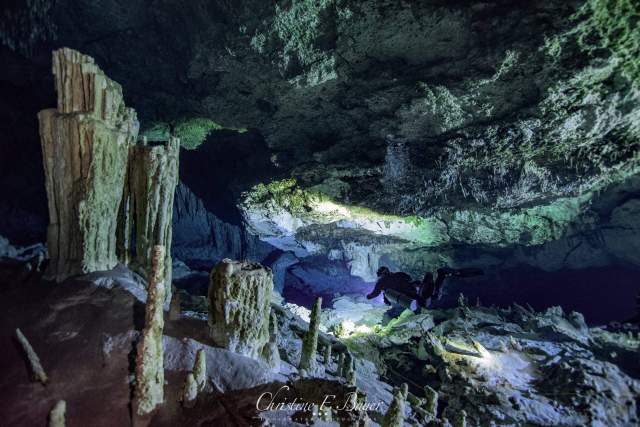
Cavern Diving vs. Cave Diving: What Recreational Divers Need to Know Before Diving Cenotes
Cenote diving is one of the main reasons certified divers travel to Playa del Carmen, Tulum, and the Riviera Maya. The water is clear, the limestone formations are beautiful, and the atmosphere is completely different from ocean…
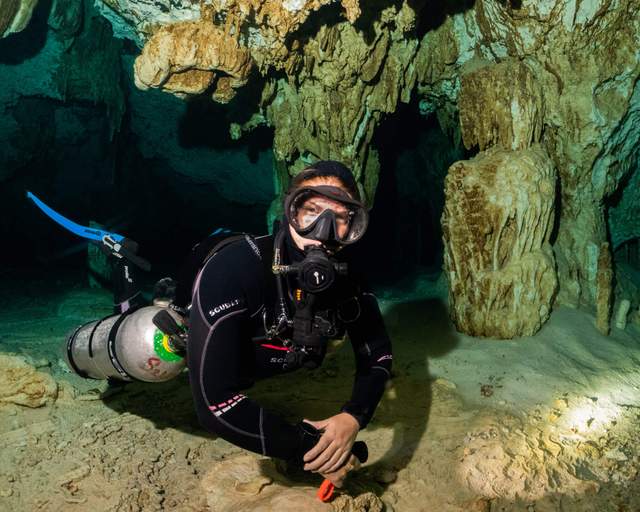
Best Cenotes for Advanced Divers Near Playa del Carmen and Tulum
Some cenotes are perfect for a first cavern dive. They are shallow, bright, spacious, and forgiving enough for certified divers who are new to freshwater cavern environments. Other cenotes are different. They may be deeper. They…
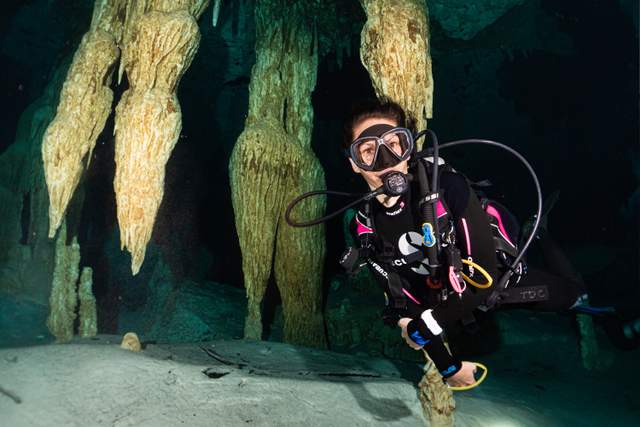
Cenote Diving Season Guide: When Is the Best Time to Dive Cenotes in Mexico?
One of the best things about cenote diving in Mexico is that there is no single “bad” season to do it. Unlike ocean diving, where wind, waves, current, plankton blooms, visibility, and marine life seasons can dramatically change…