
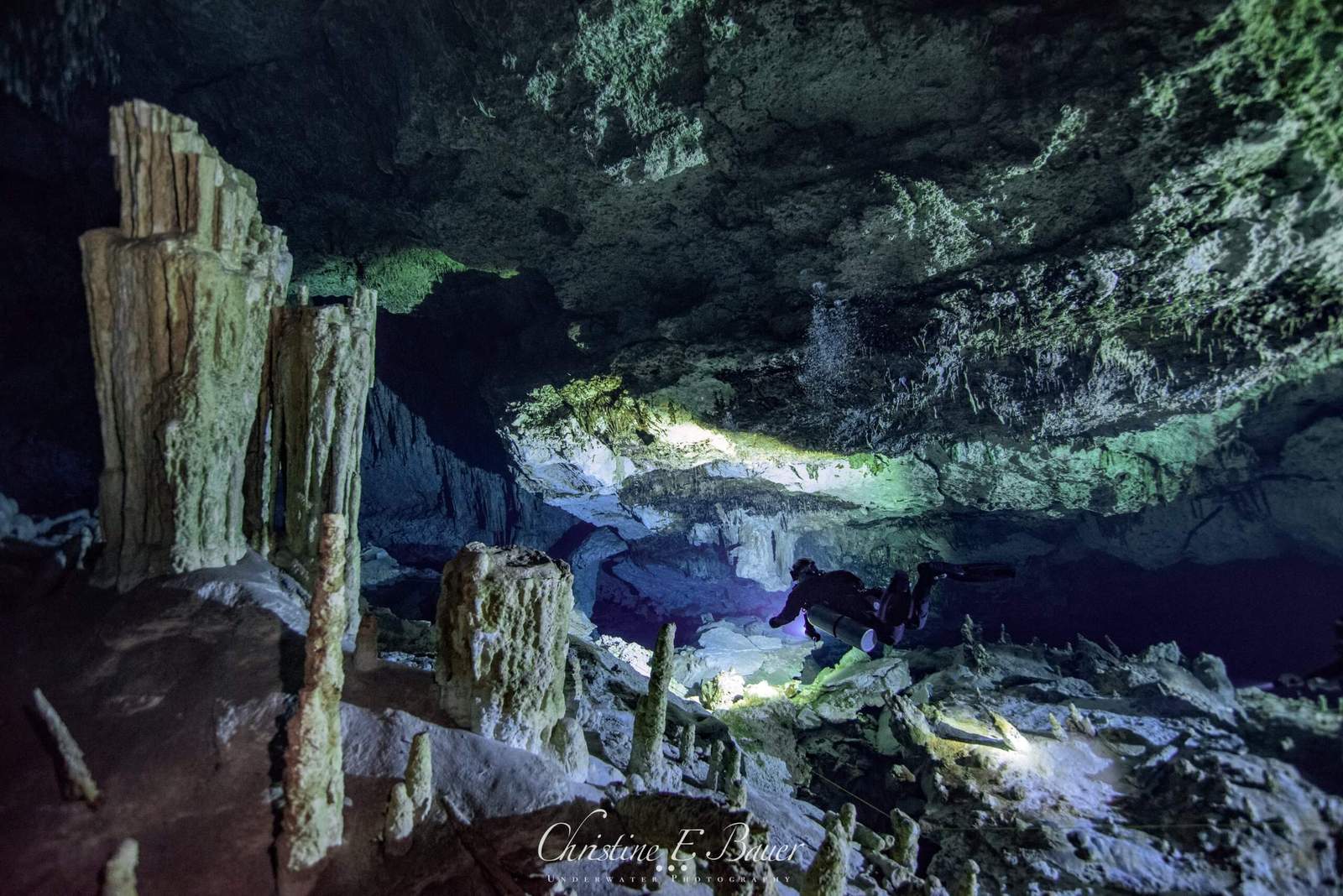
Cavern Diving vs. Cave Diving: What Recreational Divers Need to Know Before Diving Cenotes
Cenote diving is one of the main reasons certified divers travel to Playa del Carmen, Tulum, and the Riviera Maya. The water is clear, the limestone formations are beautiful, and the atmosphere is completely different from ocean…
Cenote diving is one of the main reasons certified divers travel to Playa del Carmen, Tulum, and the Riviera Maya. The water is clear, the limestone formations are beautiful, and the atmosphere is completely different from ocean diving.
But there is one point every diver should understand before booking:
Cavern diving and cave diving are not the same thing.
This difference matters because most recreational cenote dives are cavern dives, not full cave dives. A certified recreational diver can enjoy many cenotes safely when the route is appropriate, the guide is qualified, and the dive stays within recreational cavern limits. Full cave diving, on the other hand, requires specialized cave-diving training, equipment, procedures, and experience.
Confusing the two creates problems.
Some divers hear “cenote” and think, “That sounds too technical for me.” Others hear “guided tour” and assume it is just like a normal reef dive. Neither idea is completely accurate.
Cenote diving sits in a special category. It is accessible to many certified divers, but it deserves more respect than a casual open-water dive.
This guide explains the difference between cavern diving and cave diving, what recreational divers can expect in Mexican cenotes, and how to know whether a cenote dive is right for your level.
What Is a Cenote?
A cenote is a natural opening into groundwater, commonly formed in limestone landscapes. The Yucatán Peninsula is famous for cenotes because the region is made largely of soluble limestone. Over time, rainwater and groundwater dissolve the rock, creating caves, sinkholes, and underground drainage systems. NASA describes cenotes in the Yucatán as sinkholes formed when groundwater dissolves limestone and the bedrock collapses, exposing freshwater reservoirs.
For divers, this means a cenote is not just a freshwater pond. It may be an entrance into a much larger cave and aquifer system.
Some cenotes feel open, bright, and lagoon-like. Others have cavern sections with rock ceilings, light beams, formations, haloclines, or darker areas. Some connect to enormous cave systems that only trained cave divers should enter.
That is why the terminology matters.
What Is Cavern Diving?
Cavern diving is diving in the entrance area of a cave system, while staying within defined limits. The most important idea is that the diver remains in the cavern zone, where natural light is still visible and the route remains controlled.
PADI describes cavern diving as entering far enough for adventure while staying within the light zone for an easy exit to open water. In the Riviera Maya, local cenote operators commonly describe guided recreational tours as cavern dives in the illuminated cavern zone, where natural light remains visible and a permanent guideline leads back toward the entrance.
In practical terms, recreational cavern cenote dives usually involve:
- a certified diver
- a qualified local guide
- a planned route
- a detailed briefing
- a continuous guideline
- natural light in the cavern zone
- no decompression diving
- no tight restrictions
- no independent exploration
- no entering full cave passages
A cavern dive is still an overhead-environment dive. That means that during some parts of the route, you may not be able to ascend directly to the surface. This is why the briefing, gas management, buoyancy, and guide instructions matter so much.
Cavern diving can be beautiful and calm, but it is not the same as a casual reef dive.
What Is Cave Diving?
Cave diving goes beyond the cavern zone.
In cave diving, divers may go into areas where natural light is no longer visible, where the route may be longer or more complex, and where direct access to the surface is not available. Cave diving requires specialized training in line handling, gas planning, emergency procedures, lost-line protocols, lost-buddy procedures, light failures, navigation, equipment redundancy, and team communication.
This is not something a recreational diver should improvise.
Technical cave-diving agencies set specific standards for cave and cavern training. For example, TDI’s cavern standards include requirements such as maintaining a continuous guideline, no decompression diving, no restrictions, and no areas too small for two divers to swim side by side. Full cave training goes much further and prepares divers for actual cave penetration, more complex navigation, and more demanding gas-planning responsibilities.
A simple way to understand it is this:
Cavern diving shows recreational divers the entrance zone of the cave environment. Cave diving is entering the cave system itself.
They may happen in the same cenote, but they are not the same activity.
Why the Difference Matters for Recreational Divers
The difference matters because the risks change dramatically once you go beyond the cavern zone.
In open water, if something goes wrong, a diver may often ascend directly to the surface. In a cavern or cave, there may be a ceiling overhead. That means the exit is not always straight up. You must follow the route back out.
That changes everything.
It changes how you plan gas.
It changes how you use lights.
It changes how you communicate.
It changes how you control buoyancy.
It changes how serious a visibility problem can become.
It changes what happens if a diver panics or loses the group.
DAN has repeatedly warned about the danger of untrained divers entering overhead environments and emphasizes that safe cavern or cave diving requires appropriate training and procedures.
This does not mean recreational cenote diving is unsafe. It means it must be done correctly.
The safe version is not: “I saw a tunnel and decided to check it out.”
The safe version is: “I am on a guided recreational cavern route, with a qualified guide, within my certification and comfort level, following a planned route and staying inside the limits.”
That difference is everything.
Do You Need Cave Certification to Dive Cenotes?
For normal recreational cenote tours, no, you usually do not need cave-diving certification.
Most recreational cenote dives for tourists are conducted in the cavern zone, not in full cave passages. Blue Life’s cenote FAQ explains that recreational cenote dives take place in the cavern area rather than the actual cave, so a cave-diving certification is not required, although divers must be certified and have proper buoyancy control.
However, this does not mean every cenote is suitable for every certified diver.
Some cenotes are appropriate for Open Water divers with good buoyancy. Others require Advanced Open Water certification because of depth. Some shallow cenotes may still be more demanding because they are darker, more fragile, or require better trim and fin control.
Your certification card is only the starting point. Your actual ability matters.
Open Water Diver vs. Advanced Open Water Diver in Cenotes
Depth limits are part of the decision.
PADI Open Water Divers are generally trained to dive to 18 meters / 60 feet, while Advanced Open Water Divers are trained to dive to 30 meters / 100 feet. Deeper recreational diving up to 40 meters / 130 feet requires additional deep-diving training and experience.
That matters because some cenotes are shallow and beginner-friendly, while others have their main features deeper.
An Open Water diver may be suitable for a shallow, bright, beginner-friendly cenote route. But that same diver should not be taken on deeper cenote dives that exceed their certification limits.
An Advanced Open Water diver may have access to deeper sites, but the advanced card alone is not enough. The diver still needs recent experience, good buoyancy, calm breathing, and comfort in overhead-style environments.
In cenote diving, depth is only one part of the picture. A shallow but delicate cavern can require more control than a deeper open-water reef.
What Makes a Cenote Suitable for Recreational Cavern Diving?
A recreational cavern dive should be chosen carefully. The right cenote depends on the diver’s level, the route, conditions, and guide judgment.
Good recreational cavern routes usually have:
- manageable depth
- natural light in the cavern zone
- enough space for divers to move safely
- a clear route
- a continuous guideline
- no tight restrictions
- no decompression obligation
- a qualified guide
- a serious briefing
- a group size that allows control
For first-time cenote divers, the best route is usually not the deepest or most dramatic one. It is the one that gives a safe and enjoyable introduction to the environment.
A good first cenote should help you feel calm, not overwhelmed.
Why Buoyancy Matters More in Cenotes
Buoyancy control is one of the biggest differences between a good cenote dive and a bad one.
In the ocean, poor buoyancy is still a problem. You can damage coral, stir sand, or stress marine life. But in a cenote, poor buoyancy can be even more serious because of sediment, fragile limestone formations, and overhead conditions.
A careless fin kick can reduce visibility. A dangling pressure gauge can hit a formation. A diver who swims at a steep angle may stir the bottom or rise toward the ceiling. A photographer who focuses only on the shot may lose awareness of the group.
Before diving cenotes, you should be able to:
- hover calmly
- stay horizontal
- avoid using your hands to swim
- keep your fins away from the bottom
- control your depth with breathing and small adjustments
- follow a guide without crowding
- stop without crashing into anything
You do not need to be perfect. But you do need to be controlled.
Cenotes reward calm divers.
Why You Should Never Leave the Guided Route
One of the most important rules in recreational cenote diving is simple:
Do not leave the guide. Do not leave the route. Do not enter side passages.
This is where many divers misunderstand the environment. Clear water can make a passage look inviting. Natural light can make the entrance feel close. A diver may think, “I’ll just look a little farther.”
That thinking is dangerous.
The difference between a cavern route and a cave passage may not feel dramatic at first. But once you go beyond your training, you are relying on luck instead of procedure.
A responsible recreational diver does not explore independently in a cenote. They follow the guide, stay with the group, monitor gas, and stay inside the planned route.
Curiosity is good. Uncontrolled curiosity is not.
Is Cenote Cavern Diving Scary?
It does not have to be.
Many divers feel nervous before their first cenote dive because the environment sounds unfamiliar. That is normal. But when the right cenote is chosen, the briefing is clear, and the guide is professional, the dive often feels calmer than expected.
There are no waves. No boat traffic. No reef surge. No current pushing you away. The water is usually still and clear. The pace is slow. The route is planned.
The psychological difference is the overhead feeling. Some divers love it immediately. Others need time.
If you are nervous, say so before the dive. A good dive center can choose a more open, bright, beginner-friendly cenote and avoid routes that feel too dark, deep, or enclosed.
The goal is not to force bravery. The goal is to create confidence.
What Equipment Is Different?
For normal recreational cavern cenote dives, divers usually use standard recreational scuba equipment with a few adjustments.
The most common differences are exposure protection, weighting, and lights.
Cenotes are freshwater, so your weighting may be different from the ocean. Freshwater is less dense than saltwater, which usually means divers need less weight than they would use in the sea. Cenote water is also cooler than the Caribbean Sea, so many divers prefer a full wetsuit.
A dive light is commonly used on cenote cavern dives, even when there is natural light. The light helps you see formations, darker areas, hand or light signals, and details in the rock. In technical cave diving, lighting and redundancy become much more complex, but recreational divers should still understand that a light is not a toy. It is part of communication and awareness.
Your guide may carry additional equipment according to their training and the dive plan.
What a Good Cenote Briefing Should Include
A proper cenote briefing should feel more detailed than a normal reef briefing.
It should cover:
- the type of dive
- the route
- maximum depth
- expected dive time
- gas management
- group order
- hand signals
- light signals
- entry and exit
- environmental rules
- what to do if visibility is reduced
- what to do if a diver feels uncomfortable
- why divers must stay with the guide
- what areas are off-limits
Listen carefully.
Even if you have hundreds of ocean dives, cenote diving has its own procedures. Experience helps, but it does not replace listening.
A rushed or vague briefing is a warning sign. A professional cenote guide should take the time to explain the dive clearly.
When Should You Choose a Different Cenote?
A cenote may be wrong for you if it is too deep, too dark, too enclosed, too fragile, or too demanding for your current ability.
Choose a different cenote if:
- the planned depth exceeds your certification
- you feel uncomfortable after the briefing
- you have not dived in a long time
- you are struggling with buoyancy
- you are anxious in overhead environments
- you are bringing a camera that will distract you
- the operator does not ask about your experience
- the group feels too large or poorly matched
There is no shame in choosing an easier cenote. In fact, that is often the smartest decision.
Cenote diving is not about proving yourself. It is about enjoying the environment safely and respectfully.
Final Thoughts
Cavern diving and cave diving are connected, but they are not the same.
For recreational divers visiting the Riviera Maya, most cenote dives are guided cavern dives. They stay within controlled limits, use planned routes, remain in the natural light zone, and are led by qualified professionals. These dives can be suitable for many certified divers when the site matches their certification, experience, buoyancy, and comfort level.
Cave diving is different. It goes beyond recreational cavern limits and requires specialized training, equipment, gas planning, line work, and emergency procedures. Recreational divers should never enter cave passages or leave the guided route.
The safest and most enjoyable cenote divers understand the difference.
They do not treat cenotes like swimming pools.
They do not treat guided cavern dives like full cave dives.
They do not exaggerate their experience.
They do not leave the line or follow random passages.
They listen, move slowly, control buoyancy, and respect the place.
Cenotes are some of the most beautiful dive environments in the world, but they reward humility.
Know the difference. Choose the right route. Dive within your limits.
That is how cenote diving becomes not only safe, but unforgettable.
Frequently asked questions
What is the difference between cavern diving and cave diving?+
Are recreational cenote dives cavern dives or cave dives?+
Do I need cave-diving certification to dive cenotes?+
Can Open Water divers dive cenotes?+
Is cavern diving dangerous?+
Why is cave diving more serious than cavern diving?+
What does “natural light zone” mean?+
Do cenote divers follow a guideline?+
What is the most important skill for cenote cavern diving?+
Are cenote cavern dives dark?+
Can I explore a cenote on my own if I am a certified diver?+
How do I know if a cenote dive is right for me?+
Related articles
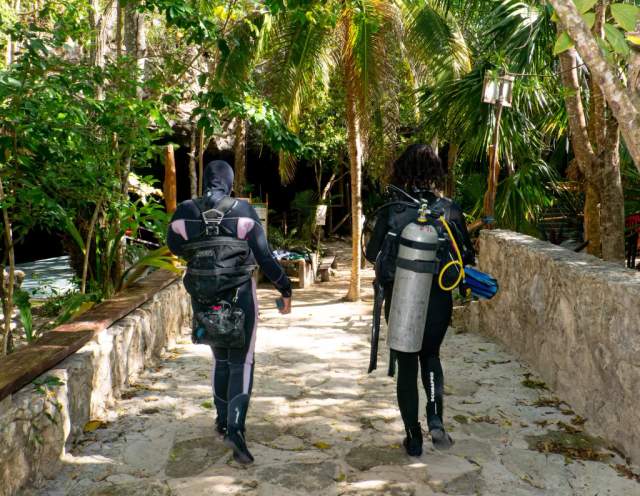
The Best Cenote Diving Routes for First-Time Cavern Divers
For many certified divers visiting the Riviera Maya, cenote diving is the experience they are most curious about — and sometimes the one they feel most unsure about. That makes sense. Cenotes are not ocean dives. They are…
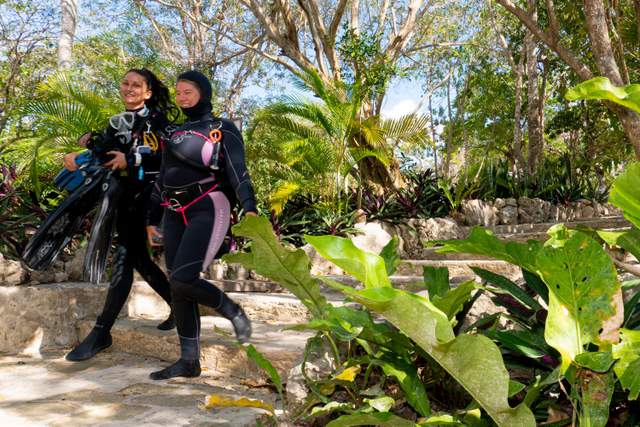
What Makes Cenote Diving Different from Ocean Diving?
If you are already a certified diver and you are planning a trip to Playa del Carmen, Tulum, or the Riviera Maya, cenote diving is probably one of the experiences you keep hearing about. And for good reason. Cenotes are not just…
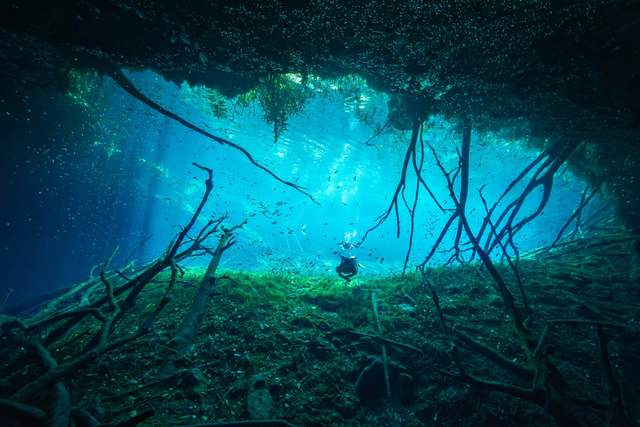
What to Expect on a Full Day Cenote Diving Trip from Playa del Carmen
A full day of cenote diving from Playa del Carmen is one of the easiest ways to experience the underground world of the Riviera Maya without needing to be a cave diver. You leave the town, drive into the jungle, gear up beside a…