
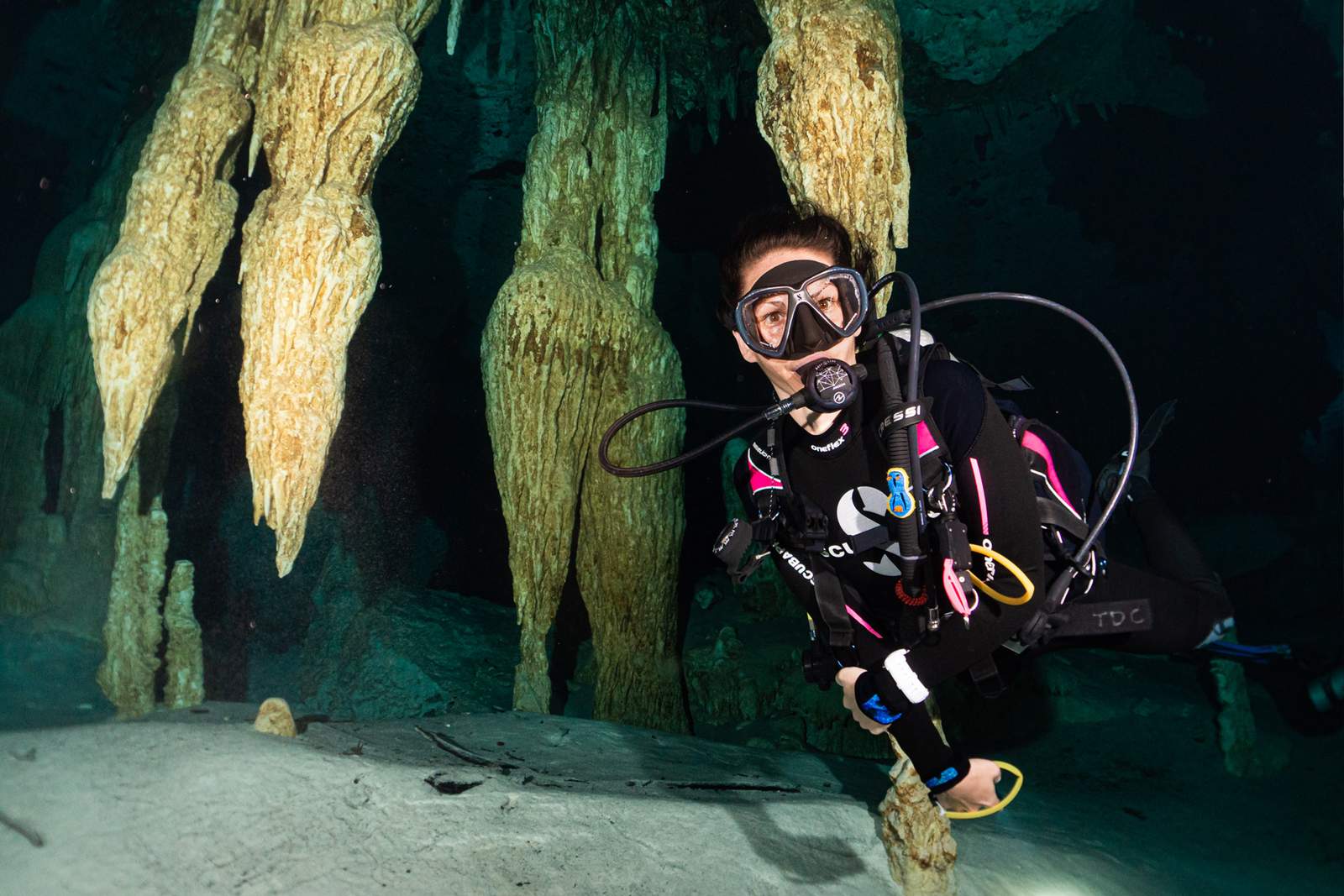
Cenote Diving Season Guide: When Is the Best Time to Dive Cenotes in Mexico?
One of the best things about cenote diving in Mexico is that there is no single “bad” season to do it. Unlike ocean diving, where wind, waves, current, plankton blooms, visibility, and marine life seasons can dramatically change…
One of the best things about cenote diving in Mexico is that there is no single “bad” season to do it.
Unlike ocean diving, where wind, waves, current, plankton blooms, visibility, and marine life seasons can dramatically change the experience, cenote diving is much more stable throughout the year. The water is protected from the open sea, there is usually no wave action inside the cenotes, and the temperature of the water stays fairly consistent.
That said, the cenote experience does change from season to season.
The light changes. The jungle changes. The number of visitors changes. The weather above the water changes. Some months are better for photography. Some are quieter. Some are hotter on land. Some are more affected by tropical rain. And some are ideal if you want to combine cenote diving with ocean diving, bull shark season, Cozumel, or reef dives in Playa del Carmen.
So, when is the best time to dive cenotes in Mexico?
The honest answer is: you can dive cenotes all year round, but the best season depends on what kind of experience you want.
This guide breaks it down by season, weather, light, visibility, water temperature, crowds, and practical travel expectations.
Can You Dive Cenotes All Year Round?
Yes, cenote diving is available all year round in the Riviera Maya.
This is one of the biggest advantages of cenote diving. While ocean conditions can change quickly because of wind, waves, storms, or port closures, cenotes are generally much more protected. Of course, extreme weather can still affect logistics, road access, site operations, and safety decisions, but the actual underwater environment is usually far more stable than the sea.
The water temperature in many cenotes stays around 24–26°C / 75–79°F throughout the year. That means the water can feel cool compared with the Caribbean Sea, especially if you are doing two dives, diving in a shaded cenote, or you get cold easily.
Most divers are comfortable in a 5 mm wetsuit. Some warm-water divers may find cenotes chilly at first, while others are perfectly fine. The important thing is to remember that cenote water does not warm up in summer the same way shallow ocean water can.
On land, however, the seasons make a big difference.
Dry Season: November to April
For many travelers, the dry season is the most comfortable time to visit the Riviera Maya. The weather is usually less humid, rainfall is lower, and temperatures are warm without feeling as intense as the peak summer months.
For cenote diving, this season has several advantages.
The first is comfort. Getting ready in scuba gear, walking through jungle paths, setting up equipment, and spending the day outdoors can feel easier when the air is not extremely hot and humid. If you are visiting from a colder country, this season can feel like perfect tropical weather.
The second advantage is travel reliability. During the dry season, there is usually less disruption from heavy rain or tropical storms. Roads are generally easier, surface conditions are more pleasant, and outdoor plans feel more predictable.
The third advantage is that this season combines very well with other diving experiences. From roughly mid-November to mid-March, Playa del Carmen also has its bull shark observation season. That means divers visiting in winter can often combine cenote diving, ocean reef diving, Cozumel, and bull shark diving in the same trip.
However, the dry season also has a downside: it is high season.
From December to April, the Riviera Maya receives many visitors, especially around Christmas, New Year, spring break, and Easter periods. Popular cenotes can feel busier, and good dive centers may book up faster.
If you want to dive cenotes in the dry season, book in advance and aim for small-group operators. The diving itself can still feel peaceful, but the logistics around the sites may be busier than in low season.
November: One of the Best Months for Cenote Diving
November is one of the most underrated months for cenote diving.
The heavy summer heat starts to ease. The rainy season is usually coming to an end. The jungle is still lush and green. Crowds are often lower than in December, and the atmosphere can be more relaxed.
For divers, November is a great transition month. You can get many of the benefits of the dry season without the full intensity of peak tourism. It is also close to the beginning of bull shark season in Playa del Carmen, depending on the year and conditions.
If you want a balance of good weather, lower crowds, and strong diving options, November is an excellent choice.
December to February: Comfortable Weather and Peak Travel Season
December, January, and February are very popular months in the Riviera Maya.
The air is usually more comfortable than in summer, humidity is lower, and many travelers come to Mexico to escape winter elsewhere. For cenote diving, this can be a very pleasant time of year. The cooler air makes gearing up easier, and the jungle environment can feel fresh rather than overwhelmingly hot.
The cenote water, however, will still feel cool. Because the air is not as hot as in summer, some divers notice the water temperature more during winter months. A proper wetsuit makes a big difference.
The main issue is crowds. These months are busy, especially around Christmas and New Year. If you want the quietest possible cenote experience, this may not be the best time unless you choose your operator carefully and start early.
Still, for many divers, winter is one of the best overall seasons because it combines cenotes, reefs, Cozumel, and bull shark observation.
March and April: Great Light, Warmer Days, More Visitors
March and April can be excellent for cenote diving, especially if you like sunny days and stronger light effects.
By this point, the weather is warmer, and the sun can create beautiful beams in certain cenotes. Light is one of the main reasons divers fall in love with cenotes, and sunny conditions can make a huge difference in the visual experience.
However, March and April can also be busy because of spring break, Easter holidays, and general high-season travel. Some cenotes may have more swimmers, snorkelers, and divers than usual.
If you are planning a trip during this period, early starts are important. The earlier you arrive, the better your chance of enjoying calmer conditions before the sites become busier.
For photographers, these months can be rewarding, but timing matters. Light beams depend on the cenote, the sun angle, the time of day, cloud cover, and season. A good local guide will know which sites make sense for the conditions.
Rainy Season: May to October
The rainy season in the Riviera Maya generally runs from around May to October, although weather patterns can vary year by year.
For many tourists, “rainy season” sounds like bad news. For cenote divers, it is not that simple.
Rainy season does not usually mean it rains all day, every day. Many days are sunny, with rain arriving in short, intense bursts, often later in the day. Mornings can still be excellent for diving. In fact, cenote diving can be a very good activity during the warmer months because the cool freshwater feels refreshing.
The jungle is also at its greenest. Cenote surroundings can look lush, alive, and beautiful. If you like a tropical atmosphere, rainy season has a lot of character.
There are also fewer visitors than in peak season, especially outside major holiday periods. That can mean quieter sites, more flexible scheduling, and a more personal experience.
The main drawbacks are heat, humidity, mosquitoes, occasional heavy rain, and the possibility of tropical weather disruptions. Roads and entries can be muddy in some places after rain, and some days may require changes of plan.
But underwater, cenotes often remain very diveable.
May and June: Warm Weather, Good Diving, Fewer Crowds
May and June can be very good months for cenote diving.
The weather is warmer, the high-season crowds have usually dropped, and cenote water feels especially refreshing after time in the heat. These months are often a good option for divers who want a quieter experience without waiting until deep low season.
May can be hot, but it is also a useful month for travelers who want fewer crowds than winter while still having many sunny days. June marks the beginning of the Atlantic hurricane season, but that does not mean hurricanes are likely every day. It simply means tropical weather becomes something to monitor.
For cenote diving specifically, May and June often offer a strong balance: good availability, warm land temperatures, refreshing water, and less pressure at popular sites.
If you get cold easily, the contrast between hot air and cool cenote water may actually make the dive feel more comfortable than in winter.
July and August: Summer Heat and Family Travel Season
July and August are hot, humid, and popular with summer travelers.
Cenote diving during these months can be excellent, but the surface interval may feel warm. You will appreciate shade, water, light clothing, and an organized dive center that manages the day efficiently.
Because this is a holiday period for many families, some cenotes may be busy with swimmers and snorkelers. Dive timing becomes important. Early departures can help avoid the busiest parts of the day.
Underwater, the cool cenote water is often a relief from the summer heat. Visibility can still be very good, and the dives can feel peaceful once you are below the surface.
If you are combining cenotes with ocean diving, remember that summer ocean conditions can vary. Cenotes are often a more protected option when the sea is less cooperative, although all diving decisions still depend on local conditions and safety judgment.
September and October: Quietest Months, Higher Weather Risk
September and October are often among the quietest months for tourism in the Riviera Maya. If your goal is to avoid crowds, these months can be attractive.
However, they also come with a higher chance of tropical storms, heavy rain, and weather-related disruptions. Atlantic hurricane season officially runs from June 1 to November 30, with peak activity typically in late summer and early fall. In practical terms, September and October are the months when travelers should be most flexible.
Does that mean you should never dive cenotes in September or October? No.
Many days are perfectly diveable. Cenotes can still be beautiful, quiet, and peaceful. But you should plan with more flexibility. Avoid building an itinerary where every day must go exactly as planned. Travel insurance can also be sensible during this period.
For divers who are already in the area and have flexible schedules, September and October can offer very quiet cenote experiences. For travelers booking a once-in-a-lifetime dive trip far in advance, these months require more tolerance for weather uncertainty.
What About Visibility During Rainy Season?
This is one of the most common questions.
In the ocean, heavy rain, wind, waves, and runoff can reduce visibility significantly. Cenotes are different. Many cenotes maintain very good visibility because they are connected to filtered groundwater systems and protected from wave action.
However, rainfall can still affect certain sites, especially open cenotes, entry areas, tannin levels, surface conditions, or flow characteristics. Some cenotes may look slightly different after heavy rain. Access paths can also become muddy or slippery.
The key point is that rainy season does not automatically mean poor cenote visibility.
In many cases, cenote diving remains excellent. Local knowledge matters. A good dive center will choose sites based on recent conditions, not just a fixed calendar.
Best Season for Light Beams
If your dream cenote dive involves dramatic light beams, then sunny days and good timing matter more than the month alone.
Light beams depend on:
- the cenote opening
- the angle of the sun
- the time of day
- the season
- cloud cover
- water clarity
- the shape of the cavern
Dry season often brings more reliable sunny weather, which can help. March, April, and May can offer strong sunlight, but this varies by site. Some cenotes have their best light at specific times of day, while others are less dependent on direct beams and more about formations or atmosphere.
If photography is your priority, tell your dive center in advance. The best route for photography may not be the same as the best route for a nervous first-time cenote diver.
Best Season for Avoiding Crowds
If you want quieter cenotes, avoid the busiest travel windows.
The most crowded periods are usually:
- Christmas and New Year
- spring break
- Easter holidays
- peak summer holiday weeks
- long weekends and local holiday periods
The quieter months are often May, June, September, October, and early November, although this can vary.
For the best chance of a peaceful experience, choose a small-group dive center, start early, and avoid the most popular sites at peak times when possible.
Best Season for First-Time Cenote Divers
First-time cenote divers can dive any time of year, but the best experience usually comes from a combination of calm logistics, good weather, and low stress.
For that reason, November, early December, May, and June can be excellent choices. These months often offer a nice balance between decent weather and lower crowds.
That said, a first-time cenote dive in January or March can also be fantastic if the route is chosen carefully and the group is small.
The most important factor for first-time cenote divers is not the month. It is the quality of the guide, the appropriateness of the route, and the diver’s comfort level.
Best Season for Advanced Cenote Divers
Advanced divers may be more flexible because they can enjoy a wider variety of cenotes, including deeper or more atmospheric sites, depending on certification and experience.
If you want to dive places like Angelita, El Pit, Dream Gate, Zapote, Maravilla, or other more demanding routes, the season is less important than conditions, guide judgment, and diver readiness.
However, advanced divers who want photography and dramatic light may prefer sunnier months. Those who want fewer people may prefer low season. Those who want to combine cenotes with bull shark observation should come in winter.
What Should You Wear for Cenote Diving?
Because cenote water is usually cooler than the Caribbean Sea, exposure protection matters.
A 5 mm wetsuit is a common choice for many divers. Some divers may be comfortable in a 3 mm suit, especially in summer, but others will get cold during two dives. If you tend to get cold, choose warmth over style. Being cold can affect your comfort, breathing, and enjoyment.
You should also bring comfortable clothes for the surface interval, sandals or shoes suitable for wet ground, a towel, water, and biodegradable products only if allowed by the cenote rules. Many sites restrict sunscreen or chemical products before entering the water, so follow your operator’s instructions.
So, What Is the Best Month to Dive Cenotes?
If we had to simplify, here is a practical guide:
Best overall comfort: November to April
Best balance of weather and fewer crowds: November, early December, May, June
Best for combining cenotes with bull sharks: mid-November to mid-March
Best for lower prices and quieter sites: May, June, September, October
Best for photographers: sunny months and site-specific timing, often spring and dry-season days
Best for maximum flexibility: any month, as long as you dive with a good local operator
There is no universal best month for everyone.
A diver who wants quiet cenotes may prefer June or September. A diver who wants a full dive holiday with Cozumel, Playa reefs, cenotes, and bull sharks may prefer January or February. A photographer may chase sunny spring mornings. A first-time cenote diver may care more about group size and route choice than the calendar.
Final Thoughts
Cenote diving in Mexico is a year-round experience.
The water stays relatively stable, the visibility is often excellent, and the environment is protected compared with the open ocean. But the season still shapes the day. Dry season brings comfortable weather and more visitors. Rainy season brings lush jungle, heat, fewer crowds, and some weather uncertainty. Winter is great for combining cenotes with bull sharks. Spring can bring beautiful sunlight. Low season can offer quieter, more intimate dives.
The best time to dive cenotes is the time that matches your priorities.
If you want the easiest travel conditions, come in the dry season. If you want fewer crowds, consider the shoulder or low season. If you want the most dramatic light, plan around sunny days and the right cenote. If you are nervous, focus less on the month and more on choosing the right guide and route.
Cenotes are not a one-season wonder.
They are always there: clear, quiet, ancient, and waiting below the jungle.
Dive them with patience, respect, and the right expectations, and almost any month can become the perfect time.
Frequently asked questions
What is the best time of year to dive cenotes in Mexico?+
Can you dive cenotes during the rainy season?+
Does cenote visibility change by season?+
Is the water cold in cenotes?+
What is the best month for cenote light beams?+
Are cenotes crowded in high season?+
Is summer good for cenote diving?+
Should I avoid cenote diving during hurricane season?+
What is the quietest season for cenote diving?+
Is winter a good time to dive cenotes?+
Related articles
The Best Cenote Diving Routes for First-Time Cavern Divers
For many certified divers visiting the Riviera Maya, cenote diving is the experience they are most curious about — and sometimes the one they feel most unsure about. That makes sense. Cenotes are not ocean dives. They are…
Cavern Diving vs. Cave Diving: What Recreational Divers Need to Know Before Diving Cenotes
Cenote diving is one of the main reasons certified divers travel to Playa del Carmen, Tulum, and the Riviera Maya. The water is clear, the limestone formations are beautiful, and the atmosphere is completely different from ocean…
A Diver’s Guide to Cenote Formations: Stalactites, Stalagmites and Ancient Caves
One of the most unforgettable parts of cenote diving is realizing that you are not just diving through water. You are diving through an ancient cave system. Unlike reef diving, where the main scenery is coral, sponges, fish, and…