
The Complete Playa del Carmen Travel Guide: Beaches, Things to Do and Local Tips
Playa del Carmen succeeds because it is not only a resort. It is a beach destination, a transport hub and a working Caribbean city in the same compact place.
Playa del Carmen succeeds because it is not only a resort. It is a beach destination, a transport hub and a working Caribbean city in the same compact place.
You can walk from breakfast to the beach, take a boat to a nearby reef, cross to Cozumel, drive into the jungle for a cenote and return for dinner without changing hotels. Stay longer and Playa becomes a base for Tulum, Cobá, Sian Ka'an, Puerto Morelos and the flooded caves that make the Riviera Maya one of the world's great diving regions.
The city is not flawless. Its center can be noisy, its beaches change with erosion and sargassum, traffic has grown and the most tourist-oriented blocks can feel very different from everyday Mexico. Choose the right neighborhood and use the city for what it does best, however, and Playa is one of the easiest places from which to experience the region.
Playa del Carmen at a glance
- Location: central Riviera Maya, on the Caribbean coast of Quintana Roo.
- Main airport: Cancún International Airport; Tulum International Airport is an alternative for some routes.
- Recommended stay: three or four nights for Playa itself; five to seven nights when using it as a regional base.
- Best-known street: Quinta Avenida, a long pedestrian corridor parallel to the beach.
- Best reason to stay: walkability combined with strong regional connections.
- Main transport: walking, taxis, ADO buses, colectivos, ferries, Tren Maya connections and rental cars.
- Main activities: beaches, food, local reefs, cenotes, Cozumel, bull sharks in season, recreational courses, cave and technical diving, shopping and nightlife.
- Currency: Mexican peso.
- Climate: tropical and warm throughout the year, with seasonal rain, humidity, wind and storm risk.
- Emergency number: 911 throughout Mexico.
Is Playa del Carmen worth visiting?
Playa is especially worthwhile for travelers who dislike choosing between a resort and a city. A central hotel gives you restaurants, pharmacies, supermarkets, beach access, transport and evening activity within walking distance. That independence is harder to achieve from an isolated all-inclusive resort.
It is also the coast's most balanced diving base. The local reefs are minutes offshore. A direct boat can reach Cozumel's marine park. Cenote entrances spread south and inland. Seasonal bull shark dives depart locally, and cave-diving professionals use the city for access to numerous flooded systems.
Playa may be the wrong choice if your only goal is a silent, private beach with every meal on property. It can also disappoint travelers who imagine an untouched fishing village. Central Playa is energetic and developed. A quieter neighborhood, Playacar resort or smaller coastal town may better fit that trip.
Playa del Carmen versus Cancún
Cancún offers larger resort infrastructure, a long hotel zone and closer airport access. Playa offers a more compact pedestrian center, the Cozumel ferry and easier access to the central and southern Riviera Maya. Choose Cancún for a classic large-resort holiday; choose Playa for independent movement and regional variety.
Playa del Carmen versus Tulum
Playa is easier to navigate without a car and usually offers a wider spread of accommodation and food prices. Tulum places you closer to its archaeological site, southern cenotes and Sian Ka'an, but its town and beach zone are separated and transport costs can mount. Playa is the more functional base; Tulum offers a more specific atmosphere.
Playa del Carmen versus Cozumel
Cozumel is better if nearly every day centers on island reef diving. Playa is better for combining reefs with cenotes, mainland culture, cave diving and a broader urban stay. Divers can remain in Playa and use Jaguar Divers' direct Cozumel boat, avoiding the passenger-ferry commute on the dive day.
When to visit Playa del Carmen
December to April
This is generally the most comfortable and popular period. Days are warm, humidity is often lower and rainfall is usually less persistent. Prices and demand rise around Christmas, New Year, spring break and Easter. Book small-group activities and preferred accommodation early.
Winter is excellent for a varied dive trip because it overlaps with the usual bull shark observation season, approximately mid-November into March. Cold fronts known locally as nortes can still bring wind, waves and port closures, so keep at least one ocean day flexible.
May to August
These months are hotter and more humid, with stronger sun and growing rain risk. Early starts improve archaeological and outdoor days. Sargassum is often a larger concern during warmer periods, although yearly and daily patterns vary.
September to November
This can be a quieter, better-value period, but tropical-weather risk deserves serious planning. The Atlantic hurricane season officially runs from June 1 to November 30, as documented by NOAA. Good insurance and flexible bookings matter more than a long-range forecast.
What sargassum means for your trip
Sargassum does not arrive uniformly. One central beach may be heavily affected while another section is usable, and conditions can change with overnight wind. Check recent local reports, your hotel's live camera or photographs and Playa's municipal sargassum information.
Do not make the entire holiday depend on a perfect mainland beach. Cenotes, pools, food experiences, archaeological sites and inland day trips remain available. For divers, sargassum on shore does not by itself describe visibility or conditions on offshore reefs.
How many days do you need?
Two days
Spend one day in the city and on the beach, then choose one defining excursion: a cenote, Cozumel, reef diving or Tulum. Two days provides a useful stop but not a regional overview.
Three or four days
This is enough for a first visit. Plan one local day, one water or cenote day and one regional excursion. Keep the fourth day flexible for weather or for the activity you discover after arrival.
Five to seven days
Playa becomes an effective base rather than a stopover. You can combine local reefs, cenotes, Cozumel, Tulum, beach time and food without leaving before sunrise every day. Divers should allow a non-diving interval before flying.
Longer stays
Ten days or more suit cave training, remote work, multi-day diving or slow exploration. At that length, consider splitting the trip with two nights on Cozumel or in Valladolid only if the move meaningfully reduces repeated travel.
How to get to Playa del Carmen
From Cancún International Airport
A pre-booked private transfer is the easiest door-to-door option, particularly for groups, families and divers with equipment. Road time can be under an hour in light traffic but varies widely with terminal pickup, construction and congestion.
ADO buses connect the airport with Playa del Carmen. The current ADO route guide estimates approximately 1 hour 30 minutes to 1 hour 50 minutes because buses may call at several airport terminals before continuing south. The central bus terminal is convenient for many downtown hotels, though a final taxi may still be needed.
Rental cars make sense if Playa is the first stop on a road trip. They are not necessary for a central city stay. Confirm insurance in writing, photograph the car and decline unofficial approaches that are not connected with your reservation or an authorized counter.
From Tulum International Airport
Tulum airport may be practical when its flight schedule or fare is better, especially for a split stay in the southern Riviera Maya. Compare the complete transfer to Playa before booking; the airport name does not make every onward journey shorter.
By Tren Maya
Playa del Carmen has a Tren Maya station, but it is not on Quinta Avenida or beside the beach. Include the station transfer and waiting time when comparing it with a bus or private vehicle. Because schedules have changed during the system's development, verify the exact date on the official booking website.
From Cozumel
Passenger ferries arrive beside Parque Fundadores in central Playa. Ultramar and Winjet publish current services. Weather and operating patterns can change, so do not build an international-flight connection around the last possible ferry.
Getting around Playa del Carmen
Walking
Central Playa is highly walkable. Quinta Avenida is pedestrianized for a long stretch, and the numbered street grid makes orientation relatively simple: avenues generally run parallel to the coast, while calles lead toward or away from the sea. Heat changes the calculation. A 20-minute map walk with luggage at midday is different from an evening stroll.
Taxis
Taxis are plentiful and useful beyond the pedestrian center. Confirm the fare before entering or ask the hotel or restaurant for the current zone price. Use an authorized vehicle, note its number and avoid leaving bags unattended.
Colectivos
Shared vans are useful for low-cost trips along Highway 307. They can work for Puerto Morelos, Akumal, Tulum and roadside cenote or attraction junctions, but they do not necessarily enter the site and space for luggage is limited. Ask where to get off and confirm the last practical return before committing to a remote stop.
ADO buses
ADO provides reserved-seat service to airports and major towns. It is more comfortable than a colectivo for luggage and longer trips. Playa has more than one relevant terminal or stop, so check the exact departure location shown on the ticket.
Bicycles
Bikes can be useful in flatter, quieter areas and between parts of Centro, but road awareness is essential. Use lights after dark, lock the bicycle securely and do not assume every avenue has protected infrastructure.
Rental cars and parking
A car is valuable for a day involving remote cenotes or several inland stops. It is often unnecessary downtown, where parking is metered or limited. Never leave luggage visible, watch for signs and photograph the parking meter or app confirmation.
Where to stay in Playa del Carmen
Centro near Quinta Avenida
Choose Centro if you want maximum convenience. The beach, ferry, restaurants, shops and nightlife are close. This area works well for short stays and first-time visitors without a car.
Noise is the key variable. A beautiful room near the nightlife blocks can carry bass late into the night. Read recent reviews specifically for sound and ask whether the room faces a club, rooftop, street or internal courtyard.
Southern Centro and the ferry area
The south end of downtown is convenient for Parque Fundadores, the ferry and Playacar access. It has heavy pedestrian movement during the day and can feel busy when ferry passengers arrive. It suits travelers planning a Cozumel day or those who want older central streets rather than the northern expansion.
Northern Centro and Zazil-Ha
The area around the northern end of Quinta and toward CTM Avenue offers cafés, apartments and access to northern beaches while remaining walkable to the center. It can be calmer than the main nightlife zone, although construction and street-by-street noise still matter. This is a strong choice for longer independent stays.
Playacar
Playacar is a gated resort and residential district south of Centro. It offers quieter streets, larger properties and a more self-contained atmosphere. Some sections have attractive beach frontage, but access rules and distance to the public street network vary. Confirm whether a rental or hotel includes the beach access and services you expect.
Colosio and areas farther north
Neighborhoods north of the established tourist center offer local restaurants, new apartments and lower prices in places. The experience changes block by block, and beach access, paving, lighting and construction can differ. These areas suit repeat visitors and longer stays more than someone expecting to walk everywhere on a two-night first visit.
West of Highway 307
Residential zones west of the highway can offer space and value, but they are not beach-center stays. Daily taxis, a car or local transport may be necessary. Check the exact route, not merely the straight-line distance on the listing.
The best things to do in Playa del Carmen
Walk Quinta Avenida—then leave it
Quinta Avenida is the city's visitor spine, with shopping, restaurants, entertainment and people-watching. Walk it once in daylight and once after dinner, but do not treat it as the whole city. A few blocks inland reveal everyday cafés, taquerías, parks and shops with a different pace and price level.
Visit Parque Fundadores
The waterfront plaza beside the Cozumel ferry is an easy orientation point. It connects the beach, ferry pier, southern Quinta and the Portal Maya sculpture. Go early for a quieter view or in the evening when the public space is active.
Spend a purposeful beach day
Choose the beach for the experience you want. Central beaches are convenient and social. The northern center offers a mix of public sand and beach-club service. Punta Esmeralda, farther north, is popular with local families and has freshwater meeting the sea. Playacar's shoreline can be broader in places but is reached most easily from within the development or by walking south along the coast when conditions allow.
Eat across different parts of the city
Build at least three kinds of meal into the trip: a neighborhood breakfast, a taco or regional-food stop and one restaurant chosen for the cooking rather than the view. Tourist-zone dining is convenient, but a short walk inland often changes both menu and price.
Dive or learn to dive
Playa's local reefs support half-day diving, while the city also gives direct access to cenotes and Cozumel. A non-certified visitor can complete a supervised Discover Scuba day, and a longer stay can support Open Water training. Qualified divers can plan cave and technical programs. The full scuba-diving guide covers the options in detail.
Visit a cenote
Choose a swimming cenote for a relaxed day or a guided cavern dive if you are certified. Facilities range from highly developed parks to rustic jungle entrances. Ask about depth, stairs, lockers, life jackets, photography, chemical restrictions and transport before leaving town.
Take the ferry to Cozumel
San Miguel works as an easy independent day trip, while the island's reefs justify dedicated diving. Check the return schedule directly with the operator and arrive early enough for ticketing and boarding. Travelers prone to seasickness should prepare for a sometimes lively crossing.
Use Playa as a cultural base
Tulum and Cobá are practical full or partial day trips; Chichén Itzá and Valladolid require a longer day or overnight. Start archaeological visits early to reduce heat and tour-bus congestion, and verify current INAH access information rather than relying on a ticket reseller.
Playa del Carmen's beaches
Mexican beaches and the federal maritime zone are public domain. SEMARNAT states that adjacent owners must permit free access where public routes do not exist. In practice, a public beach can still be awkward to reach where gated property borders the coast. Use recognized street ends and public access points.
Public sand does not make private facilities free. Beach-club chairs, pools, toilets, parking and food service can carry a fee or minimum spend. Ask before sitting down.
The shoreline changes with storms, erosion, restoration work and sargassum. A recommendation based on last year's beach width may no longer be accurate. Check current conditions and follow swimming flags. Playa's coastline lacks a continuous protective outer reef directly at the beach, so waves and boat traffic deserve attention.
Recreational, cave and technical diving from Playa del Carmen
Local reef diving
The reefs are a short boat ride from shore and support morning, afternoon and occasional night trips. Jaguar Divers' current ocean-diving program uses a maximum of four divers per guide and selects sites for conditions, certification and comfort.
Cenote cavern diving
Certified recreational divers can visit suitable cavern routes without cave certification. These dives remain within defined entrance and natural-light limits and follow a planned guideline under a qualified guide. Some cenotes suit Open Water divers; deeper or more demanding sites require Advanced certification and stronger skills.
Cozumel from Playa
Jaguar Divers' direct-boat Cozumel day normally leaves from Playa and returns around early afternoon, conditions permitting. It avoids carrying dive gear on the passenger ferry and provides two guided marine-park dives.
Bull shark observation
The normal season runs from roughly mid-November into March. Jaguar Divers publishes an observation approach without feeding. The animals are wild, so date ranges and sightings remain subject to nature, and the diver must meet the current experience requirements.
Cave diving
The Riviera Maya is widely regarded as the world's premier cave-diving region. The Quintana Roo Speleological Survey records more than 1,700 kilometers of surveyed underwater cave passage across the state, with exploration continuing. Qualified cave divers can arrange guided dives; recreational divers must remain in the cavern zone.
Sidemount and technical training
Playa supports specialist dive travel because it combines access roads, accommodation, food and an established technical community. Jaguar Divers currently offers Sidemount, Cavern, Intro to Cave and Full Cave programs. Training is performance based, and published minimum durations may extend.
Cenotes near Playa del Carmen
“Near” can mean a short drive south or more than an hour toward Tulum and inland. Do not choose only by distance. Choose by activity and ability.
- Chac Mool and Kukulkán: classic first cavern experiences for appropriately skilled certified divers, with light, formations and water-layer effects.
- Dos Ojos: two shallow recreational routes, extensive formations and options for snorkeling companions.
- Casa Cenote: a more open, mangrove-lined environment with a link to the sea and greater visible aquatic life.
- El Pit: a deep Advanced-level dive with a large chamber, halocline and hydrogen-sulfide layer; not a first cenote dive.
- Angelita, Zapote, Maravilla and Yaakun: advanced experiences with distinctive deep or layered environments.
- Nicte Ha: shallow, bright and attractive for highly controlled photographers, subject to current camera rules and fees.
Some shallow sites are psychologically or technically more demanding than deeper open water. The dive center should review certification, logged dives, last dive date, buoyancy and comfort before recommending one.
Best day trips from Playa del Carmen
Cozumel
Best for island atmosphere, reef diving and snorkeling. Easy as a ferry day, better as an overnight if you want several dive days.
Tulum
Best for the archaeological site and a contrasting destination. Go early, then add only one realistic afternoon element. The official INAH page should be the reference for current hours, combined fees and site restrictions.
Cobá
Best for an inland Maya city set among forest and lagoons. Its extensive sacbeob, or raised roads, demonstrate a very different urban landscape from coastal Tulum. Check the INAH Cobá information before visiting.
Akumal
Best for a quieter coastal day and regulated marine-nature experiences. Follow protected-zone rules, use authorized guides where required and give turtles space.
Puerto Morelos
Best for a smaller-town rhythm, a meal by the sea and access to northern reef or cenote activities. It is a manageable contrast to central Playa.
Sian Ka'an
Best for a full nature day. The UNESCO property protects forest, wetlands, lagoons, mangroves and marine habitat. Choose an operator that respects wildlife and be realistic about road and boat time.
Chichén Itzá and Valladolid
Possible as a long day, more enjoyable with an overnight in Valladolid. Chichén Itzá deserves time and context; avoid an itinerary that spends most of the day collecting passengers and very little at the site.
Where and what to eat
Look for cochinita pibil, lechón, sopa de lima, panuchos, salbutes and relleno negro for Yucatecan flavors. Add tacos al pastor, grilled seafood, ceviche and a marquesita for a broader local mix. Ask about habanero sauce before assuming it is mild.
Quinta Avenida offers convenience and atmosphere, but prices often fall and menus become more local a few blocks inland. The municipal center, northern neighborhoods and Ejidal side all contain worthwhile everyday restaurants. Specific businesses change quickly, so check recent opening information and reviews rather than relying on a years-old “best restaurant” list.
For food safety, choose busy, well-run stands; look for clean work surfaces and ingredients protected from heat. Drink purified water. Travelers with serious allergies should carry a translated card and explain cross-contact, not only the ingredient name.
Nightlife and evenings
Playa has clubs, rooftops, beach bars, live music and quiet restaurants within a compact area. The main club zone is around Calle 12 and Quinta Avenida, while calmer evenings are easier toward Calle 38, side streets and residential neighborhoods.
Nightlife location matters before check-in, not after midnight. If sleep is important, do not assume a high floor eliminates sound. Read recent room-specific reviews and ask the property directly about nearby venues or construction.
Use well-lit routes, keep control of drinks, avoid illegal drugs and take an authorized taxi when returning beyond a comfortable walk. Do not carry a passport or every bank card on a night out.
Shopping
Quinta Avenida concentrates souvenirs, international brands, pharmacies and convenience shopping. For ordinary supplies, supermarkets and shopping centers away from the tourist strip usually offer clearer fixed pricing. Artisan markets can be worthwhile, but “Maya,” “local” or “handmade” labels are not guarantees of origin.
When buying silver, gemstones, cigars, spirits or high-value crafts, choose a reputable seller, ask for a detailed receipt and be wary of pressure or implausible certification claims. Pay in the stated currency and understand the exchange rate before approving a card terminal.
Suggested Playa del Carmen itineraries
Two-day first visit
Day 1: Breakfast inland, walk Quinta and the central grid, visit Parque Fundadores and choose a beach section according to current conditions. Finish with dinner away from the busiest blocks.
Day 2: Take one full experience: a cenote day, two local reef dives, Cozumel or Tulum. Keep the evening simple after a long outdoor day.
Three-day beach, city and cenote itinerary
Day 1: City orientation and beach.
Day 2: Guided swimming or diving cenote selected for the group.
Day 3: Slow breakfast, northern Playa or Playacar walk, food exploration and an optional evening activity.
Five-day Playa and Riviera Maya itinerary
Day 1: Arrival and local orientation.
Day 2: Playa beaches and neighborhoods.
Day 3: Tulum early, followed by a relaxed afternoon.
Day 4: Cenote or Sian Ka'an day.
Day 5: Cozumel, with ferry times checked the previous day.
Five-day diving itinerary
Day 1: Local reefs or a refresher assessment.
Day 2: Introductory cenote cavern dives.
Day 3: Cozumel direct-boat diving.
Day 4: Rest, beach or cultural day.
Day 5: Advanced cenote, bull shark observation in season or further reefs based on certification and how the earlier dives went. Retain the required surface interval before flying.
Rainy-day plan
Tropical rain is often temporary. Use short showers for a long lunch, café, spa treatment, cooking activity or shopping, then reassess. Avoid driving into flooded streets and do not enter a cenote or ocean activity if the operator closes it for safety.
Playa del Carmen for different travelers
Families
Choose a quieter property with a pool, confirm room layout and plan early outdoor activities. Check child ages and swimming ability for cenotes, boats and scuba. Private transfers often simplify airport days.
Couples
Central boutique hotels maximize walking and food; Playacar and northern beachfront properties provide more retreat. Mix one active day with one unstructured day rather than commuting throughout the trip.
Solo travelers
Centro offers the easiest logistics and social options. Verify single-person minimums or supplements for specialized tours. Group activities can be useful, but keep independent transport and meeting details.
Divers
Stay within practical reach of the dive center, not merely the beach. Ask about equipment storage, morning meeting times and pickup before booking a remote resort. Reserve a non-diving period before the flight.
Cave and technical divers
Prioritize equipment space, drying, secure storage, access to suitable food and the road route to the chosen operator. Send cylinder, gas and configuration requirements before arrival. A nightlife address is rarely the best technical-diving address.
Remote workers
Confirm actual in-room internet with recent tests, not a generic “Wi-Fi available” label. Check desk comfort, construction noise and power-backup policy. Northern Centro and residential areas can be better for a multi-week stay than the club zone.
Travelers without a car
Central Playa is the easiest base in the Riviera Maya. Walk locally, use ADO for major towns, colectivos for light day trips and guided transport for remote sites.
What does a Playa del Carmen trip cost?
Playa supports budget, midrange and premium travel, but location changes the equation. A slightly more expensive central room can save daily taxis. An inexpensive apartment far west may cost more in time and transport than expected.
Include these lines in the budget:
- accommodation taxes and any resort fee;
- airport transfer;
- meals, purified water and tips;
- local taxis or car parking;
- ferry tickets and island transport;
- site, park and camera fees;
- tours, diving and equipment;
- nightlife or beach-club spending;
- insurance and an emergency reserve.
Use Mexican pesos for ordinary spending. Where a service is quoted in US dollars, ask how a peso payment will be converted. Decline dynamic currency conversion on a card terminal when your own bank provides a better rate, and use ATMs attached to established banks.
Practical local advice
- Carry cash in small denominations; cards are common but not universal.
- Drink purified water rather than untreated tap water.
- Download offline maps for cenote and inland travel.
- Use sun-protective clothing and shade; the UV exposure is strong even on hazy days.
- Keep a light rain layer during wetter months.
- Ask before applying sunscreen or repellent at a cenote; many sites prohibit them.
- Save accommodation, insurer and transport contacts offline.
- Mexico uses 127V/60Hz power with mainly Type A and B plugs.
- Learn a few phrases: ¿Cuánto cuesta? (How much is it?), ¿Aceptan tarjeta? (Do you take cards?), and Tengo una alergia grave a… (I have a severe allergy to…).
Safety and mistakes to avoid
Playa is a major tourism city, not a controlled resort bubble. Use the same judgment you would in any unfamiliar urban destination. Current government advisories should be reviewed before travel; the U.S. State Department currently advises increased caution in Quintana Roo and recommends awareness after dark and well-lit pedestrian routes.
Secure phones and wallets in crowds, use authorized transport and avoid isolated beaches at night. Do not purchase illegal drugs. Keep drinks in sight. Photograph rental-car condition and leave no visible bags inside.
At sea, obey flags and local instructions. Boat lanes, waves and currents can exist even when the water looks inviting. At cenotes, follow site rules and never enter an underwater passage without the correct guide, certification and equipment.
Common planning mistakes include choosing a hotel from a wide-area map, assuming all “downtown” blocks are equally quiet, booking every day before seeing the weather, underestimating airport traffic and scheduling a flight too soon after scuba diving.
Make Playa work as a base, not a checklist
The best Playa del Carmen itinerary contains space. Walk the city, choose a beach using today's conditions, eat somewhere you did not find in an international list and let one or two major experiences define the trip.
If scuba is one of those experiences, contact Jaguar Divers with your dates, certification, logged dives, last dive date, number of dive days, party size and whether you prefer reefs, cenotes, caves or a mix. A good plan connects the right environments in a sensible progression and still returns you to Playa with time to enjoy the city.
Sources and fact-check record
This guide was checked on September 2, 2026. Businesses, prices, transport schedules, site fees, beach conditions and access rules should be verified again close to publication and travel.
- Mexican Caribbean Tourism Board: Playa del Carmen
- ADO: Cancún Airport to Playa del Carmen
- Official Tren Maya booking site
- Ultramar
- Winjet
- SEMARNAT: Free public beach access
- Playa del Carmen municipal sargassum information
- INAH: Tulum archaeological site
- INAH: Cobá archaeological site
- UNESCO World Heritage Centre: Sian Ka'an
- NOAA: Tropical Cyclone Climatology
- Divers Alert Network: Flying After Diving
- Jaguar Divers: Ocean Diving in Playa del Carmen
- Jaguar Divers: Guided Cave Diving
- U.S. Department of State: Mexico Travel Advisory
Related articles
The Ultimate Guide to Scuba Diving in Playa del Carmen
Playa del Carmen is one of the rare dive destinations where a single hotel can put you within reach of warm Caribbean reefs, freshwater cenotes, Cozumel's famous walls, seasonal bull sharks and some of the most important flooded caves on Earth.
The Definitive Riviera Maya Travel Guide: Where to Go, Stay and Explore
The Riviera Maya is often sold as a line of resorts beside turquoise water. That description is accurate and completely inadequate.
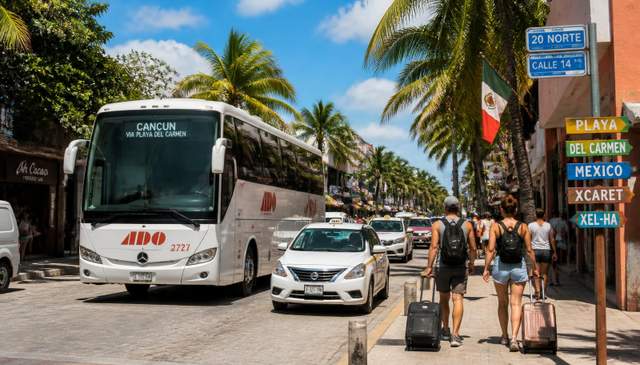
Getting Around Playa del Carmen: Transport Guide
Transport can be tricky in a new country, so we have you covered. Three easy ways to get to and from Cancun airport, around town, and to our dive shop: inDrive, our trusted driver Miguel, and the ADO bus.